Cherokee Muster Rolls, 1835 – 1838

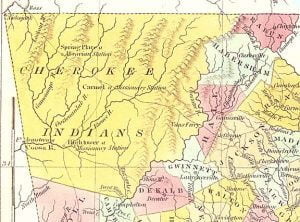
1830 Map of Cherokee Territory in Georgia

The Cherokee Muster Rolls of 1835-1838 document the forced relocation of the Cherokee people during the Trail of Tears. These rolls list families who were moved west, including those who left voluntarily, were rounded up by military forces, or migrated under Cherokee leadership. They offer crucial genealogical information for descendants of Cherokee individuals from the southeastern U.S., particularly those connected to the Cherokee Nation and the Eastern Band. These records, like the 1835 Henderson Roll and various muster rolls, are important for researchers tracking Cherokee ancestry during this difficult chapter in American history.
SC GenWeb – South Carolina GenWeb

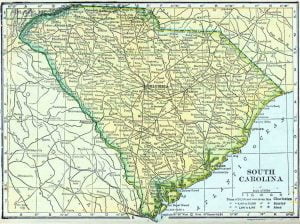
1910 South Carolina Census Map

SCGenWeb is created by a group of volunteers as part of the USGenWeb Project working together to provide free genealogy websites for genealogical research in every county in South Carolina. This Project is non-commercial and fully committed to free genealogy access for everyone.

The Alstons and Allstons of North and South Carolina

The Alstons and Allstons of North and South Carolina

John Allston (1666-1719) emigrated from England to Berkeley District, South Carolina, likely accompanying Governor John Archdale in 1694. His descendants and relatives spread across South Carolina, North Carolina, Georgia, Florida, Alabama, Mississippi, and Tennessee, among other places. This account traces the family lineage, providing genealogical details that reach back to the 1300s in England. It encompasses related families such as Ballard, Crawford, Groves, Hawkins, Peques, and Williams, offering a comprehensive view of the interconnected family history.

Heyward Family of South Carolina, 1670-1770

The Colonial History of the Hayward Family

The Heyward family played a significant role in the colonial history of South Carolina, with their lineage tracing back to the arrival of the family’s pioneer during the Proprietary Government period. James Barnwell Heyward’s *The Colonial History of the Heyward Family of South Carolina, 1670-1770* provides a detailed genealogical record of the Heyward family, focusing on the first three generations in Carolina. The work, intended as an epitome of a more comprehensive compilation, emphasizes the family’s rural roots, agricultural successes, and contributions to South Carolina, including their service during the Confederate War. Through documented public records, Heyward offers a thorough account of the family’s evolution from the late 17th century through the American Revolution.

Elder James Martin of the District of Orangeburg South Carolina

Elder James Martin and his brother Simon Martin title page

Steve Malone’s work, “Elder James Martin of the Districts of Orangeburg, Lower Ninety-Six, Edgefield and Barnwell, South Carolina; Warren County, Kentucky; and Knox, Gibson, Posey and Vanderburgh Counties, Indiana Territory/Indiana, and his brother, Simon Martin of the Same Districts in South Carolina,” offers a meticulous exploration into the life of an individual whose existence paints a vivid picture of the American frontier during its formative years. Free to read or download.

The Young family of Bristol Virginia

The Young family of Bristol

“The Young Family of Bristol” by Walter Jorgensen Young is a comprehensive genealogical study tracing the lineage and history of the Young family, primarily focusing on their roots in Bristol and their subsequent spread to various regions in the United States, including Virginia, North Carolina, and Kentucky. Published in 1937, this 55-page manuscript has garnered significant recognition in the field of genealogy and history, evidenced by Young’s accolades from various esteemed societies. Michael Cadet Young (b.1684/1685) emigrated in 1716 from England to what is now Columbia, South Carolina, moving shortly to Brunswick County, Virginia. Descendants and relatives lived in Virginia, Kentucky, New York, Ohio, Washington and elsewhere. Additional family names researched include: Head, Hieatt, Jacoby, Mitchell, Morton, and Price families. This PDF is free to read or download.

Early Records of Lee County, Virginia

Early Records of Lee County, Virginia, vol 2

This manuscript is a compilation of various early records of Lee County, Virginia. It is suggested that you use the index liberally for your searches which starts on page 152. Surnames will appear under a variety of spellings so be sure to check them all.

Revolutionary War Pension and Bounty Land Warrants

Civil War Cannon

This article helps you access the Revolutionary War Pension and Bounty Land Warrants for free. Following two simple steps, one to search, and the other to browse the actual microfilms, you can quickly find your ancestors Revolutionary War pension record, or Bounty-Land record and download the images. During 1800-1900 the United States issued more than 80,000 pensions and bounty-land-warrants to soldiers of the Revolutionary War, their spouse, or their children. Was your ancestor one of them?

Genealogy of the Lewis family in America

Genealogy of the Lewis family in America

Free: Genealogy of the Lewis family in America, from the middle of the seventeenth century down to the present time. Download the full manuscript. About the middle of the seventeenth century four brothers of the Lewis family left Wales, viz.: Samuel, went to Portugal; nothing more is known of him; William, married a Miss McClelland, and died in Ireland, leaving only one son, Andrew; General Robert, died in Gloucester county, Va. ; and John, died in Hanover county, Va. It is Andrews descendants who are featured in the manuscript.

Threads of ancestors, Telford – Ritchie – Mize

Threads of ancestors, Telford - Ritchie - Mize: a link among the days which binds the generations each with each

“Threads of Ancestors: Telford – Ritchie – Mize: A Link Among the Days Which Binds the Generations Each with Each,” authored by Leila Ritchie Mize and Jessie Julia Mize, explores the intricate tapestry of family lineage and migration across continents and centuries. Tracing roots back to Alexander Telford Sr., who settled near Rockbridge, Virginia around 1760, this book delves into the journeys and settlements of his descendants across the United States. Highlighting the Scotch-Irish origins of these families, the authors meticulously draw upon an extensive array of sources, including family Bibles, historical records, and personal diaries, to provide a detailed account of the Telford, Ritchie, and Mize families. Their narrative not only charts the genealogical paths of these families but also illuminates their substantial roles in the historical and cultural development of the regions they inhabited. This work stands as a testament to the enduring bonds and shared heritage that link successive generations, forming a foundational piece for both family members and historians interested in the Scotch-Irish contribution to American history.

Chronicling America Historical Newspapers

Winchester Star

Chronicling America is a Website providing access to information about historic newspapers and select digitized newspaper pages, and is produced by the National Digital Newspaper Program (NDNP). NDNP, a partnership between the National Endowment for the Humanities (NEH) and the Library of Congress (LC), is a long-term effort to develop an Internet-based, searchable database of U.S. newspapers with descriptive information and select digitization of historic pages. Supported by NEH, this rich digital resource will be developed and permanently maintained at the Library of Congress. An NEH award program will fund the contribution of content from, eventually, all U.S. states and territories.

Small Town Newspapers

Winchester Star

Small Town Papers gives you access to the people, places and events recorded in real time over the decades or even centuries! Browse and search the scanned newspaper archive from 1846 up to the current edition! Their archives contain millions of names of ancestors not found anywhere else. Enhance your Ancestry research with their high resolution scanned newspaper archive. Find distant relatives and discover your ethnic heritage by reading the articles about family and friends written back in the day.

Hackleman Family Record

Hackleman Family Records

This is a transcript of the first 31 pages of Elijah Hackleman’s Scrap book No. 2. The original is in the Wabash County Indiana Historical Museum. Although material of genealogical significance is to be found throughout the scrapbook, the material following deals with the Hackleman family. Michael Hackleman was born in Germany about the year 1720. He migrated to America in the seventeenth year of his age (1737) and was bound to a Maryland, or Pennsylvania farmer for three years to pay for his passage. He finally cleared twenty-six acres of land, and squared the account. He married Mary Sailors in March of 1751, and settled on the Susquehanna River, near the line of Pennsylvania and Maryland. He later in life moved to the Abbeville District, South Carolina where he died in 1808. His children were named Jacob, Lydia, Conrad, John and George.

What Happened to the Sephardic Jewish Colonists?

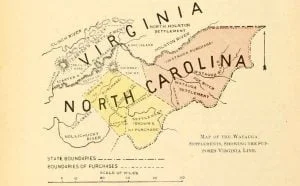
Map of the Watauga Settlements

The post-colonial history of Sephardic Jewish communities in the Southern Piedmont and Appalachians remains largely speculative due to a lack of scientific study. Early Sephardic Jews were integrated into Southern society, often becoming successful professionals and intermarrying with Christians, leading to a gradual assimilation. Key figures, like Francis Salvador and David Yulee, emerged as political leaders. However, over time, many descendants lost touch with their Jewish heritage, possibly relocating to more favorable areas or converting to other faiths. This history contrasts sharply with more documented Jewish experiences in other regions.

The Battle of Taliwa

Battle of Taliwa

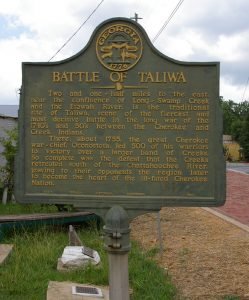
The Battle of Taliwa is celebrated in Cherokee history as a great victory, allegedly led by teenager Nancy Ward against a Creek town. However, contemporary records and maps fail to confirm Taliwa’s existence, indicating Upper Creek dominance in northern Georgia until the Revolutionary War’s end. In reality, the conflict occurred post-war with mixed-blood raiders, not representing the Cherokee, facing American militia. Further research revealed no battle record, only earlier Cherokee defeats. This raises questions about the authenticity and historical context of the Cherokee narrative surrounding Taliwa.

Biography of Joshua Cates

Joshua Cates was an influential and energetic businessman in Christian County, remembered for his eccentricities and originality. A native of South Carolina, he was known for his vigorous land dealings and unique approach to life, often eschewing conventional habits such as formal dining and sleep. Cates was a horse dealer and slave trader, and despite a serious injury from a slave, he continued his ventures with his characteristic vigor. His later years were marked by mental decline, but he left behind a legacy of a large family and a remarkable presence in the community.

Genealogy of the Yeargan Family 1730-1890

Yeargan's Chapel

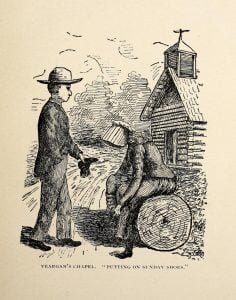
“The Origin and Genealogy of the Yeargan Family: As Far As Heard From Up to This Date, 1890” is an early genealogy by Leonidas Hilary Yeargan and Hilary H. L. Yeargan. Published in Nashville, Tennessee, by the Publishing House of the M. E. Church, South, in 1891, this manuscript offers an account of the Yeargan family lineage as best the authors could research at the time. The primary aim of this manuscript was to document and connect the descendants of Rev. Andrew’s ten sons, grouping them into family units as they dispersed. Although some descendants remained unknown at the time of publication, the manuscript remains a valuable resource for understanding the Yeargan family’s roots and legacy.

The Mudd Family of Prairie du Rocher Illinois

Family of James Duncan Mudd

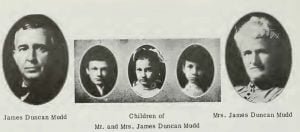
James Duncan Mudd, a notable farmer in Prairie du Rocher, descends from one of Randolph County’s oldest settler families, whose roots trace back to 1633 in Maryland. The Mudds migrated through Kentucky, where his great-grandfather, Francis Mudd, served in the War of 1812 before settling in Illinois. James T. Mudd, his father, expanded the family farm, ultimately cultivating 380 acres. James Duncan Mudd, born in 1862, has continued this legacy, now owning 440 acres and contributing significantly to his community and Church.

Olcott Family of Norwich Vermont

Hon. Peter Olcott, born on April 25, 1733, in Bolton, Connecticut, moved to Norwich, Vermont, in the 1770s. He was a prominent community leader, serving in various public offices including first justice of the peace and Lieutenant Governor. His influence helped establish the town’s first meeting house and burying ground. Olcott was also active in military affairs during the American Revolution. He died on September 12, 1808, leaving a legacy through his numerous children and significant contributions to Norwich’s early governance and development.

Mission’s Among the Southern Indians

Reverend Hugh Wilson

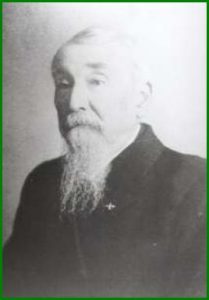
In 1819, the Synod of South Carolina initiated a mission among Southern Indians, focusing on the Chickasaws. Rev. David Humphries and Rev. T. C. Stewart initially sought permission to establish a mission, which was granted by the Chickasaw king in 1820. Stewart, the sole missionary, founded Monroe Station in 1821, accompanied by two families. This mission became a pivotal center for education and Christianity, significantly influencing the Chickasaw community, fostering future leaders and laying the groundwork for their ongoing civilization.