
Genealogy | Native American | DNA | About Us
Tell A Friend!


Genealogy Records

Genealogy
Biographies
Cemetery Records
Census Records
DNA
Family Tree Search
History Books Online
Military Records
Native American Records
Surnames
Vital Records
World Genealogy

Indian Genealogy

Proving Your Indian Heritage
Native American Rolls
Indian Tribal Histories
Indian Tribes by Location
Indian Books and Articles
Indian Genealogy Queries
Indian Census Records
Indian Cemetery Records

Indian Tribes

Abenaki Indians
Algonquian Indians
Apache Indians
Arapaho Indians
Blackfeet Indians
Caddo Indians
Cherokee Indians
Cheyenne Indians
Chickasaw Indians
Chinook Indians
Chippewa Indians
Choctaw Indians
Comanche Indians
Cree Indians
Creek Indians
Crow Indians
Dakota Indians
Delaware Indians
Fox Indians
Hopi Indians
Huron Indians
Illinois Indians
Iowa Indians
Iroquois Indians
Kansa Indians
Kickapoo Indians
Kiowa Indians
Menominee Indians
Miami Indians
Missouri Indians
Modoc Indians
Mohawk Indians
Mohegan Indians
Munsee Indians
Natchez Indians
Navajo Indians
Nex Percé Indians
Omaha Indians
Onondaga Indians
Osage Indians
Oto Indians
Ottawa Indians
Paiute Indians
Pawnee Indians
Pottawatomie Indians
Sauk Indians
Seminole Indians
Seneca Indians
Shawnee Indians
Siouan Indians
Sioux Indians
Stockbridge Indians
Tuscarora Indians
Winnebago Indians
Zuni Indians


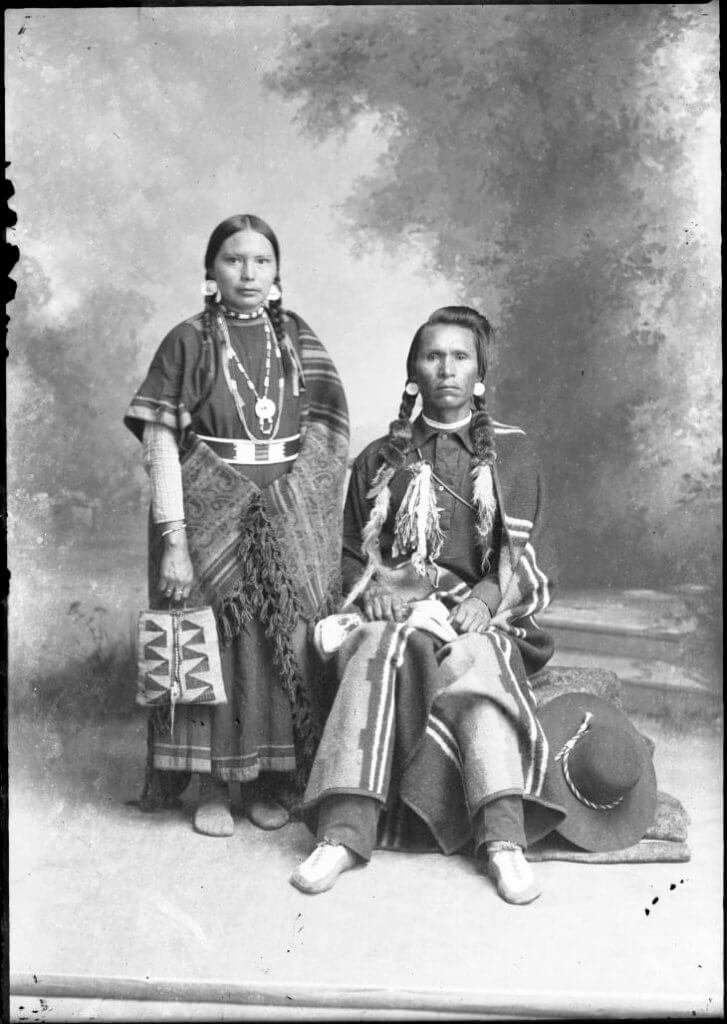
Spokan Indian Tribe History

Spokan A name applied to several small bodies of Salish on and near Spokane River, north east Washington.  According to Gibbs the name was originally employed by the Skitswish to designate a band at the forks of the river, called also Smahoomenaish.  by the whites it was extended to cover several nearly allied divisions, which Gibbs enumerates as follows: Sin-slik-ho-ish, Sintootoolish, Sma-hoo-men-a-ish (Spokenish), Skai-schil-t'nish, ske-chei-a-mouse, Schu-el-stish, Sin-poil-schne, Sin-shee-lish.  The last tow were claimed by the Okinagan also.  All of them are now held to be separate divisions and not bands of one tribe.  The population was estimated by Lewis and Clark in 1805 at 600 in 30 houses, and by Gibbs in 1853 at 450. In 1908 there were 301 "lower Spokan" and 238 "Upper Spokan" under the Colville agency, Washington, and 95 Spokan on Coeur d'Alene reservation, Idaho; total 634.  In 1909 the entire number of Spokan in Washington was 509, while those in Idaho numbered 104.

Moses

     This noted chief, who presides with almost regal authority over the vast reservation in Northern Washington named from himself, has had a strange and romantic history. According to his own story (the matter has been much disputed) he is of Cherokee birth. He says that when a child he went with an uncle to Wisconsin. Having been lost by that uncle, he wandered several years. At last, having made his way across the Rocky Mountains, staying long enough among the various tribes to become somewhat acquainted with their various languages and customs, he brought up among the Spokane. His ability and strength soon won him the admiring recognition of the tribe; and by degrees he became the head chief of the mongrel remnants of tribes between the Spokane and the Columbia.
     Some have maintained that he is in reality a white man. However this may be, it is true that he can speak and write the language perfectly, and in whatever way he may be approached shows extraordinary ability and boldness. He has acquired great wealth in horses and cattle. There are those who hint at dark and desperate deeds in the grim defiles of his "coulée," which have supplied him abundantly with gold and jewels. Probably no one can aver with certainty of this matter; but it is true that traders and miners have mysteriously disappeared in those rocky solitudes; and the "king of the coulées" is not known to be in lack of whatever of gold and wine and women his fiery passions may crave.
     He is now about fifty years old. He is of lofty stature and giant strength. Aside from the uncanny and searching look of his restless eyes, he is almost the perfection of barbarous beauty. There is nothing in his looks to sustain the theory of his white origin. On account of his oratorical ability and majestic mien, he has often been called the Webster of the Columbia.

The books presented are for their historical value only and are not the opinions of the Webmasters of the site.
 
Handbook of American Indians, 1906

Index of Tribes or NationsFree Genealogy | Indian Genealogy | Index of Tribes or Nations  


Genealogy Websites

Other Websites

Disclaimer:

This site includes some historical materials that may imply negative stereotypes reflecting the culture or language of a particular period or place. These items are presented as part of the historical record and should not be interpreted to mean that the WebMasters in any way endorse the stereotypes implied.


Access Genealogy is the largest free genealogy website not owned by Ancestry.com. As such, it relies on the revenue from commercial genealogy companies such as Ancestry and Footnote to pay for the server and other expenses related to producing and warehousing such a large collection of data. If you're considering joining either of these programs, why not join from our pages, and help support free genealogy online!

Copyright 1999-2009, by Access Genealogy.com
A project by Webified Development