
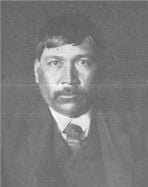
Catawba Indians, Catawba Nation (probably from Choctaw katápe, ‘divided,’ ‘separated,’ ‘a division.’ – Gatschet). The most important of the eastern Siouan tribes. It is said that Lynche creek, South Carolina east of the Catawba territory, was anciently known as Kadapau; and from the fact that Lawson applies this name to a small band met by him southeast of the main body, which he calls Esaw, it is possible that it was originally given to this people by some tribe living in eastern South Carolina, from whom the first colonists obtained it.
The Cherokee, having no b in their language, changed the name to Atakwa, plural Anitakwa. The Shawnee and other tribes of the Ohio valley made the word Cuttawa. From the earliest period the Catawba have also been known as Esaw, or Issa (Catawba iswä‘, `river’), from their residence on the principal stream of the region, Iswa being their only name for the Catawba and Wateree rivers. They were frequently included by the Iroquois under the general term Totiri, or Toderichroone, another form of which is Tutelo, applied to all the southern Siouan tribes collectively. They were classed by Gallatin (1836) as a distinct stock, and were so regarded until Gatschet visited them in 1881 and obtained a large vocabulary showing numerous Siouan correspondences. Further investigations by Hale, Gatschet, Mooney, and Dorsey proved that several other tribes of the same region were also of Siouan stock, while the linguistic forms and traditional evidence all point to this eastern region as the original home of the Siouan tribes. The alleged tradition which brings the Catawba from the north, as refugees from the French and their Indian allies about the year 1660, does not agree in any of its main points with the known facts of history, and, if genuine at all, refers rather to some local incident than to a tribal movement. It is well known that the Catawba were in a chronic state of warfare with the northern tribes, whose raiding parties they sometimes followed, even across the Ohio.
Catawba Tribe History
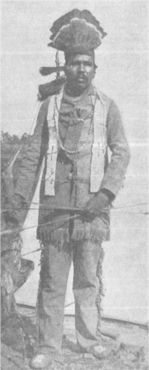
The first notice of the Catawba seems to be that of Vandera in 1579, who calls them Issa in his narrative of Pardo’s expedition. Nearly a century later, in 1670, they are mentioned as Ushery by Lederer, who claims to have visited them, but this is doubtful.
Lawson, who passed through their territory in 1701, speaks of them as a “powerful nation” and states that their villages were very thick. He calls the two divisions, which were living a short distance apart, by different names, one the Kadapau and the other the Esaw, unaware of the fact that the two were synonymies. From all accounts they were formerly the most populous and most important tribe in the Carolinas, excepting the Cherokee.
Virginia traders were already among them at the time of Lawson’s visit. Adair, 75 years later, says that one of the ancient cleared fields of the tribe extended 7 miles, besides which they had several smaller village sites. In 1728 they still had 6 villages, all on Catawba river, within a stretch of 20 miles, the most northern being named Nauvasa. Their principal village was formerly on the west side of the river, in what is now York County, South Carolina, opposite the mouth of Sugar creek. The known history of the tribe till about 1760 is chiefly a record of petty warfare between themselves and the Iroquois and other northern tribes, throughout which the colonial government tried to induce the Indians to stop killing one another and go to killing the French. With the single exception of their alliance with the hostile Yamasi, in 1715, they were uniformly friendly toward the English, and afterward kept peace with the United States, but were constantly at war with the Iroquois, Shawnee, Delawares, and other tribes of the Ohio valley, as well as with the Cherokee. The Iroquois and the Lake tribes made long journeys into South Carolina, and the Catawba retaliated by sending small scalping parties into Ohio and Pennsylvania. Their losses from ceaseless attacks of their enemies reduced their numbers steadily, while disease and debauchery introduced by the whites, especially several epidemics of smallpox, accelerated their destruction, so that before the close of the 18th century the great nation was reduced to a pitiful remnant. They sent a large force to help the colonists in the Tuscarora war of 1711-13, and also aided in expeditions against the French and their Indian allies at Ft Du Quesne and elsewhere during the French and Indian war. Later it was proposed to use them and the Cherokee against the Lake tribes under Pontiac in 1763. They assisted the Americans also during the Revolution in the defense of South Carolina against the British, as well as in Williamson’s expedition against the Cherokee.
In 1738 smallpox raged in South Carolina and worked great destruction, not only among the whites, but also among the Catawba and smaller tribes. In 1759 it appeared again, and this time destroyed nearly half the tribe. At a conference at Albany, attended by delegates from the Six Nations and the Catawba, under the auspices of the colonial governments, a treaty of peace was made between these two tribes. This peace was probably final as regards the Iroquois, but the western tribes continued their warfare against the Catawba, who were now so reduced that they could make little effectual resistance. In 1762 a small party of Shawnee killed the noted chief of the tribe, King Haiglar, near his own village. From this time the Catawba ceased to be of importance except in conjunction with the whites.
In 1763 they had confirmed to them a reservation, assigned a few years before, of 15 miles square, on both sides of Catawba river, within the present York and Lancaster Counties., S. C. On the approach of the British troops in 1780 the Catawba withdrew temporarily into Virginia, but returned after the battle of Guilford Court House, and established themselves in 2 villages on the reservation, known respectively as Newton, the principal village, and Turkey Head, on opposite sides of Catawba River.
In 1826 nearly the whole of their reservation was leased to whites for a few thousand dollars, on which the few survivors chiefly depended. About 1841 they sold to the state all but a single square mile, on which they now reside. About the same time a number of the Catawba, dissatisfied with their condition among the whites, removed to the eastern Cherokee in western North Carolina, but finding their position among their old enemies equally unpleasant, all but one or two soon went back again. An old woman, the last survivor of this emigration, died among the Cherokee in 1889. A few other Cherokee are now intermarried with that tribe. At a later period some Catawba removed to the Choctaw Nation in Indian Territory and settled near Scullyville, but are said to be now extinct. About 1884 several became converts of Mormon missionaries in South Carolina and went with them to Salt Lake City, Utah.
Catawba Indians Culture
The Catawba were sedentary agriculturists, and seem to have differed but little in general customs from their neighbors. Their men were respected, brave, and honest, but lacking in energy. They were good hunters, while their women were noted makers of pottery and baskets, arts which they still preserve. They seem to have practiced the custom of head-flattening to a limited extent, as did several of the neighboring tribes. By reason of their dominant position they gradually absorbed the broken tribes of South Carolina, to the number, according to Adair, of perhaps 20.
In the early settlement of South Carolina, about 1682, they were estimated at 1,500 warriors, or about 4,600souls; in 1728 at 400 warriors, or about, 400 persons. In 1738 they suffered from smallpox; and in 1743, after incorporating several small tribes, numbered less than 400 warriors. In 1759 they again suffered from smallpox, and in 1761 had some 300 warriors, or about 1,000 people. The number was reduced in 1775 to 400 souls; in 1780 it was 490; and in 1784 only 250 were reported. The number given in 1822 is 450, and Mills gives the population in 1826 as only 110.
In 1881 Gatschet found 85 on the reservation, which, including 35 employed on neighboring farms, made a total of 120. The present number is given as 60, but as this apparently refers only to those attached to the reservation, the total may be about 100.
For Further Study
The following articles and manuscripts will shed additional light on the Catawba as both an ethnological study, and as a people.
- Lawson, History of Carolina, 1714 and 1860.
- Gatschet, Creek Migration Legend, 1-11, 1884-88.
- Mooney, Siouan Tribes of the East, Bull. 22, B. A. E., 1894.
- Mooney in 19th Rep. B. A. E., 1900.
- H. Lewis Scaife, History and Condition of the Catawba Indians, 1896.

