
Genealogy | Native American | DNA | About Us
Tell A Friend!


Genealogy Records

Genealogy
Biographies
Cemetery Records
Census Records
DNA
Family Tree Search
History Books Online
Military Records
Native American Records
Surnames
Vital Records
World Genealogy

Indian Genealogy

Proving Your Indian Heritage
Native American Rolls
Indian Tribal Histories
Indian Tribes by Location
Indian Books and Articles
Indian Genealogy Queries
Indian Census Records
Indian Cemetery Records

Indian Tribes

Abenaki Indians
Algonquian Indians
Apache Indians
Arapaho Indians
Blackfeet Indians
Caddo Indians
Cherokee Indians
Cheyenne Indians
Chickasaw Indians
Chinook Indians
Chippewa Indians
Choctaw Indians
Comanche Indians
Cree Indians
Creek Indians
Crow Indians
Dakota Indians
Delaware Indians
Fox Indians
Hopi Indians
Huron Indians
Illinois Indians
Iowa Indians
Iroquois Indians
Kansa Indians
Kickapoo Indians
Kiowa Indians
Menominee Indians
Miami Indians
Missouri Indians
Modoc Indians
Mohawk Indians
Mohegan Indians
Munsee Indians
Natchez Indians
Navajo Indians
Nex Percé Indians
Omaha Indians
Onondaga Indians
Osage Indians
Oto Indians
Ottawa Indians
Paiute Indians
Pawnee Indians
Pottawatomie Indians
Sauk Indians
Seminole Indians
Seneca Indians
Shawnee Indians
Siouan Indians
Sioux Indians
Stockbridge Indians
Tuscarora Indians
Winnebago Indians
Zuni Indians


Eastern and Eastern Band of Cherokee of North Carolina

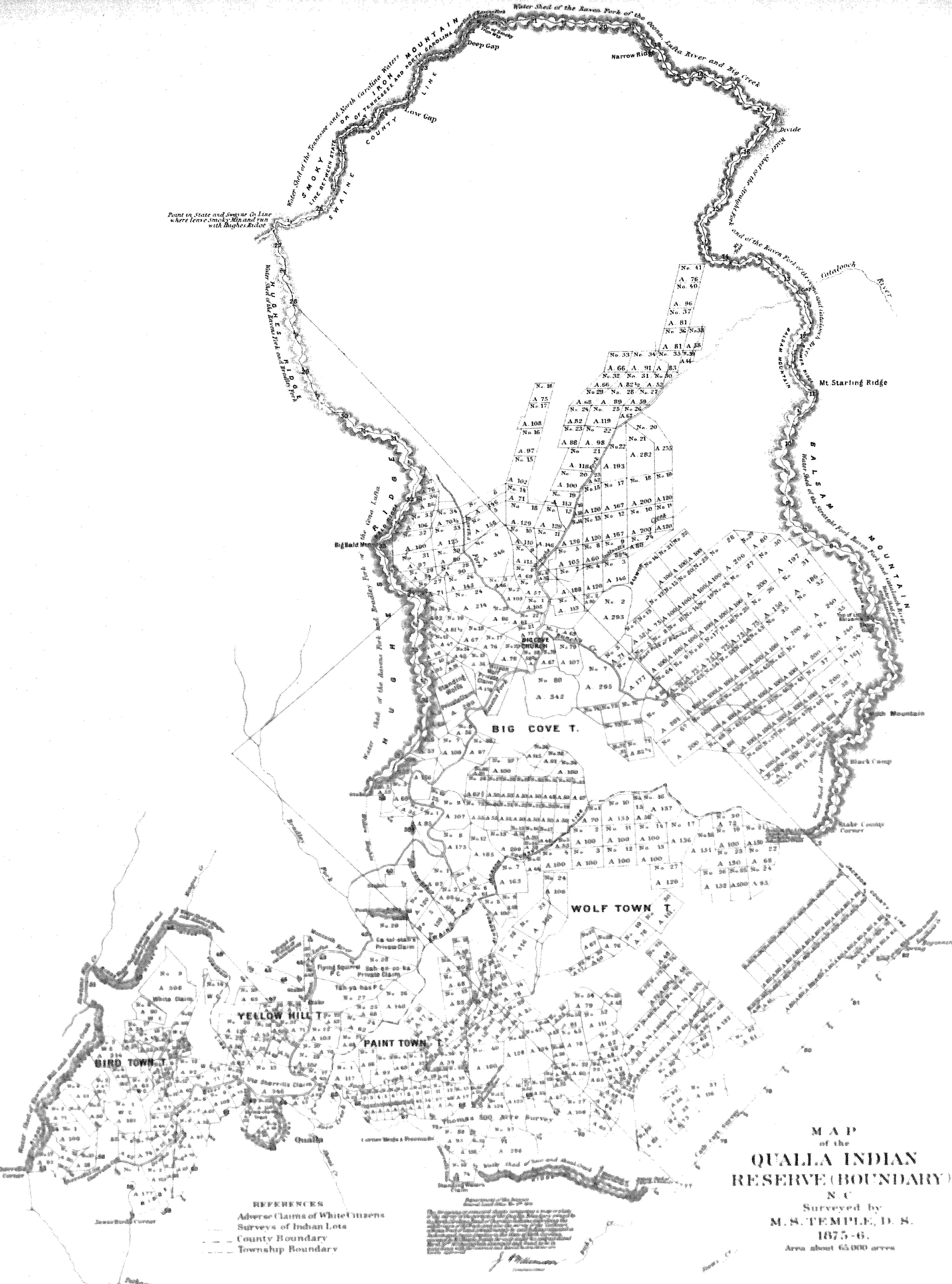
The statistics and condition of the Indians given in the present bulletin, as provided in the census law of March 1, 1889, show the status of the Eastern Band of Cherokees of North Carolina, with incidental mention of the Eastern Cherokees. These Indians are taxed, have developed into good citizens of the United States, and vote in North Carolina. They are almost entirely self-supporting, receiving only a small allowance from the United States for educational purposes. A few mechanics are found among them, but their chief occupations are farming, lumbering, and day labor. They are a moral, law-abiding, and industrious people, and the censuses from 1850 to 1890 show them to be increasing. The band, which has been incorporated by the general assembly of North Carolina as The Eastern Band of Cherokee Indians, occupies the tract known as the Qualla boundary. The other Eastern Cherokees mentioned reside in the states of Alabama, Georgia, and Tennessee, and are citizens of the United States and of the states named.

The bulletin was prepared by Mr. Thomas Donaldson, expert special agent of the Census Office, and the report on the condition of these Indians was made under his direction by General Henry B. Carrington, United States army (retired), special agent for the collection of statistics of the Eastern Band of Cherokees.

Indian Genealogy


Notes About the Book:

Source: Indians, Eastern Band of Cherokees of North Carolina, by Thomas Donaldson, 1892, 11th Census of the United States, Robert P. Porter, Superintendent, US Printing Office, Washington, D.C.

Online Publication: The manuscript was scanned and then ocr'd. Minimal editing has been done, and readers can and should expect some errors in the textual output.


This site includes some historical materials that may imply negative stereotypes reflecting the culture or language of a particular period or place. These items are presented as part of the historical record and should not be interpreted to mean that the WebMasters in any way endorse the stereotypes implied.

Free Genealogy | Indian Genealogy
 

Genealogy Websites

Other Websites

Disclaimer:

This site includes some historical materials that may imply negative stereotypes reflecting the culture or language of a particular period or place. These items are presented as part of the historical record and should not be interpreted to mean that the WebMasters in any way endorse the stereotypes implied.


Access Genealogy is the largest free genealogy website not owned by Ancestry.com. As such, it relies on the revenue from commercial genealogy companies such as Ancestry and Footnote to pay for the server and other expenses related to producing and warehousing such a large collection of data. If you're considering joining either of these programs, why not join from our pages, and help support free genealogy online!

Copyright 1999-2009, by Access Genealogy.com
A project by Webified Development