Revolutionary War Pension and Bounty Land Warrants

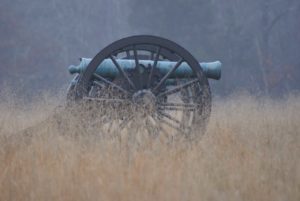
Civil War Cannon

This article helps you access the Revolutionary War Pension and Bounty Land Warrants for free. Following two simple steps, one to search, and the other to browse the actual microfilms, you can quickly find your ancestors Revolutionary War pension record, or Bounty-Land record and download the images. During 1800-1900 the United States issued more than 80,000 pensions and bounty-land-warrants to soldiers of the Revolutionary War, their spouse, or their children. Was your ancestor one of them?
Descendants of John and Mary Howes of Montgomery County, Maryland

Descendants of John and Mary Howes of Montgomery County, Maryland

John Howes of Montgomery County, Maryland, was born ” … after 1740, m[arried] Mary_____, and d[ied] between November, 1808 and March 1809. He is buried in Laytonsville, Maryland with his mother, his brother James and daughter Sarah. About a year after his death his widow, Mary, went to Bucks County, Kentucky.”–P. 8. Descendants and relatives lived in Maryland, Kentucky, New York, Michigan, Ohio, California, Illinois, Massachusetts, Washington, D. C., Missouri, Nebraska, Colorado, California, Maine, Pennsylvania, and elsewhere.

Chronicling America Historical Newspapers

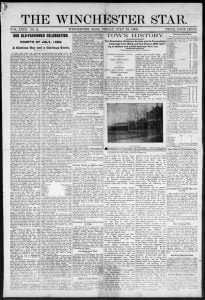
Winchester Star

Chronicling America is a Website providing access to information about historic newspapers and select digitized newspaper pages, and is produced by the National Digital Newspaper Program (NDNP). NDNP, a partnership between the National Endowment for the Humanities (NEH) and the Library of Congress (LC), is a long-term effort to develop an Internet-based, searchable database of U.S. newspapers with descriptive information and select digitization of historic pages. Supported by NEH, this rich digital resource will be developed and permanently maintained at the Library of Congress. An NEH award program will fund the contribution of content from, eventually, all U.S. states and territories.

Descendants of Abraham Tappan of Newbury, MA

tappan

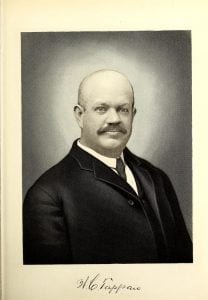
The Tappan family, descendants of Abraham Toppan who arrived in Newbury, MA, in 1637, has established itself prominently in Attleboro’s jewelry industry. Ephraim H. Tappan and his sons, Charles H. and William C., contributed significantly to its growth with innovative practices. The brothers founded Tappan Brothers, evolving into D.F. Briggs Co., renowned for producing items like the Carmen bracelet. Their legacy continues through their descendants, maintaining a strong presence in local business and community endeavors.

Hawes Family of Wrentham, MA

The Hawes family has deep roots in Wrentham, Massachusetts, tracing back to Edward Hawes, born circa 1620. His descendants, including notable figures like Oliver Snow Hawes and George H. Hawes, contributed significantly to local industries and governance. Oliver established a successful machinery firm in Fall River, emphasizing cash payments to employees, while George excelled in the cotton cloth brokerage. They were known for their charitable involvement and community leadership, leaving a lasting legacy in Wrentham and Fall River.

Grinnell Family of New Bedford, MA

l grinnell

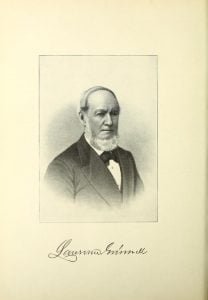
The Grinnell family, with roots tracing back to the early 17th century in Rhode Island, has played a significant role in the history of New Bedford, MA. Notable members include Capt. Cornelius Grinnell, a Revolutionary War patriot and merchant, and his son Joseph, a U.S. Congressman. The family continued to thrive in business, particularly in the manufacturing of fire protection equipment, chiefly attributed to Frederick Grinnell’s innovations. Throughout generations, the Grinnells have exemplified civic engagement and entrepreneurial spirit within their community.

Lindsey Family of Fall River, MA

The Lindsey family of Fall River, MA, descends from Christopher and Daniel Lindsey, Scottish brothers who immigrated in the 17th century. Christopher settled in Lynn, while Daniel is linked to a branch in Bristol, Rhode Island. John Lindsey, married in 1694, marks the family’s early presence in America. William Lindsey (b. 1816) became a successful businessman and civic leader in Fall River, serving in various capacities including mayor. His son, Crawford, continued the legacy, engaging in both business and public service, garnering respect in his community.

Cindy Henderson’s DNA Results

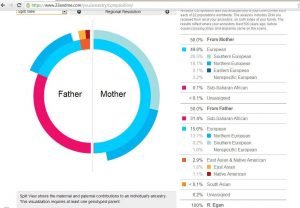
Split View of Cindy Henderson's Ancestry

Cindy Henderson’s ancestry reflects a diverse heritage. Her mother has Irish/German roots and Italian lineage from Abruzzo, Italy, while her father’s maternal line includes a Black American background from New Jersey. His paternal side connects to both Black and American Indian ancestry from North Carolina. Particularly noted is her 2nd great grandfather’s potential ties to the Eastern Band of Cherokee. DNA analysis shows a mix of African, European, and possibly East Asian ancestry, though Native American connections remain uncertain due to limited documentation.

North America Indian Names of Places in Mississippi, Alabama, Georgia, Florida, and Louisiana

The post examines the significance and origins of North American Indian place names in Mississippi, Alabama, Georgia, Florida, and Louisiana, particularly those derived from the Choctaw and Chickasaw languages. It highlights how these names reflect the rich cultural and linguistic heritage of the Native American tribes, while noting that many translations have become corrupted over time. The text provides numerous examples of place names alongside their original meanings, illustrating the deep historical connections embedded in the geography of the region.

Important Men of the Choctaw Indians

The Choctaw Nation has produced numerous significant figures throughout its history, notably Tush-ka Lu-sa, who valiantly defended his people against Spanish forces. While early documentation is scarce, many leaders have emerged from the 18th century onward, whose contributions to their community deserve recognition. This account aims to honor both the living and deceased Choctaw and Chickasaw men, emphasizing their dedication to improving their people’s welfare and the importance of preserving their legacies as examples for future generations.

The Meeting of Folsom and Nittakachih

The council convened to distribute the annuity ended in chaos, revealing deep-seated animosities between two chiefs, Nittakachih and Amosholihubih, foreshadowing potential civil war. As tensions escalated, both factions prepared for conflict, yet a moment of profound silence arose as Nittakachih approached, signaling a desire for peace. Through dialogue, misunderstandings were cleared, leading to a restoration of friendship and trust, thus averting a civil war. This episode highlights the leadership of Colonel David Folsom and the complex dynamics of the Choctaw Nation during a pivotal moment in their history.

Memoirs of the Harkins Family

John Harkins, a prominent figure in the Choctaw nation, arrived around 1800 and married Major Lewis LeFlore’s daughter, fathering four sons, including notable leaders like Col. George W. Harkins. George distinguished himself as a lawyer and advocate for Choctaw rights. His sister Salina, a well-educated and independent woman, worked as a telegraph operator. The Harkins family exemplified the virtues of their community, contributing to the moral and intellectual advancement of their people, while the author reflects on their enduring legacy and the need for greater recognition of Indigenous achievements.

Memoirs of John Pitchlynn

Peter Perkins Pitchlynn was the Choctaw Principal Chief from 1864-1866

John Pitchlynn was a notable figure in the Choctaw Nation, recognized as a benefactor who integrated into their society by marrying a Choctaw woman and serving as an interpreter for the U.S. government. He gained the respect of both the Choctaws and missionaries through his moral conduct. His son, Peter P. Pitchlynn, became a prominent leader and advocate for education and peace among tribes, notably facilitating a treaty with the Osages. Known for his integrity and leadership, Peter’s legacy reflects the potential for collaborative progress within Native communities.

Biography of Doctor Horace Hatch

Doctor Horace Hatch, born on May 23, 1788, in Tunbridge, Vermont, graduated from Dartmouth College in 1814 and earned his M.D. in 1817. He practiced medicine in Norwich for twenty years before moving to Burlington, where he continued for another two decades. In 1861, he took a position in the Treasury Department, actively supporting Vermont soldiers in hospitals. He relocated to New York City in 1865, passing away on October 28, 1873. Known for his benevolence, he was survived by his notable son, A. S. Hatch.

Biography of Honorable Daniel Azro Ashley Buck

Daniel Azro Ashley Buck, born April 19, 1789, in Norwich, Vermont, graduated from Middlebury College in 1807 and from West Point in 1808. He served in the military during the War of 1812, eventually becoming a captain. A significant figure in Vermont politics, he represented Chelsea in the state legislature, served as speaker, and held congressional office twice. Despite his early successes, Buck struggled with alcoholism, leading to a decline in his later years. He died in Washington, D.C., on December 22, 1841.

The Choctaw Claim

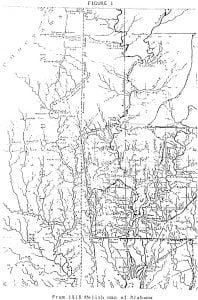
1818 Melish Map of Alabama

The Choctaw Nation has been actively monitoring the ongoing boundary dispute between Texas and the United States over Greer County, rooted in conflicting interpretations of the Red River’s location as per historical treaties. The Doaks Stand Treaty of 1820 ceded extensive lands to the Choctaws, including territories west of Arkansas. They argue that a 1855 cession did not include lands sold without their consent by the United States to Spain. As no boundary surveys have clarified the situation, the Choctaws have yet to assert their claims formally.

The Meeting in 1811 of Tecumseh and Apushamatahah

Peter Perkins Pitchlynn was the Choctaw Principal Chief from 1864-1866

In 1811, Tecumseh, the Shawnee leader, met with Apushamatahah, a prominent Choctaw chief, to rally southern tribes against American encroachment amidst looming war between the U.S. and England. Tecumseh passionately urged unity against their common foe, warning of the dire consequences of inaction. Apushamatahah countered with a call for prudence, advocating for peaceful measures. Ultimately, the council resulted in favoring American alliance, thwarting Tecumseh’s ambitions. This pivotal meeting highlighted the contrasting strategies of the two influential leaders, shaping tribal responses during a critical historical period.

The End of the Florida War, The Fate of the Seminoles – Indian Wars

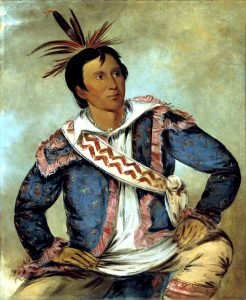
The conclusion of the Florida War led to the Seminoles’ relocation to a distant reservation, significantly diminishing their tribal status, particularly after the death of their leader, Osceola. The conflict began in 1835 and involved numerous battles and failed truces, lasting nearly twelve years. After the war, Billy Bowlegs emerged as a notable leader, though lacking Osceola’s acclaim. Ultimately, few Seminoles remained in Florida, adapting to a more peaceful lifestyle and engaging in agriculture and artisan crafts.

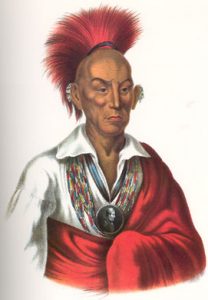
Black Hawk’s War – Indian Wars

Black Hawk

The events of Black Hawk’s War brought the esteemed Sauk leader, Black Hawk, into the national spotlight. Born around 1767, he became a renowned warrior, leading successful campaigns against rival tribes. Tensions escalated after a controversial treaty in 1804 led to increased violence against the Sacs and Foxes. In 1832, after a series of conflicts following the death of several Indians, Black Hawk led his people in resistance, but ultimately faced defeat. Following his surrender, he was taken to Washington, gaining respect and recognition before his death in 1838.

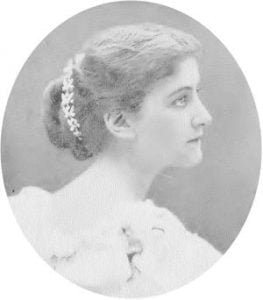
Mary Victoria Leiter, Baroness Curzon of Kedleston

Mary Victoria Leiter

Mary Victoria Leiter, Baroness Curzon of Kedleston, emerged as an influential figure following her marriage to Lord Curzon, who became Governor-General of India in 1899. An American by birth, her transition from the social elite of Washington, D.C. to viceregal life in India was marked by charm and grace. She played a significant role in her husband’s political career and earned admiration from both British and Indian communities through her engagement in social issues, particularly during crises like the plague. Her impactful presence signified a new chapter in the history of American women in British governance.