Pennsylvania Indian Forts

A commission, appointed in 1893 by Governor Pattison, aimed to assess the importance of marking the historical forts erected by early Pennsylvania settlers against Native Americans before 1783. The committee divided the state into five districts and investigated numerous forts, many of which had been forgotten or unrecognized by the public. Key sites include Fort Augusta, Fort Jenkins, and Fort Muncy, among others. The report emphasizes historical significance and acknowledges contributions from local historians and archeologists in locating these forts.
Fort McClure, Columbia County, Pennsylvania

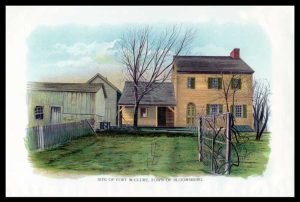
Site of Fort McClure, Town of Bloomsburg

During the years 1777 and the subsequent years, Columbia County faced significant threats from Indian fighters despite efforts by military authorities to protect the frontiers. Local defenders operated from a network of forts, including Fort Muncy and Fort Jenkins, along the Susquehanna River. Prominent figure Moses Van Campen played a crucial role in defending these settlements and later helped establish McClure’s Fort after his capture in 1780. This fort became a strategic military hub despite never being formally attacked, highlighting the intense struggles for safety in the region.

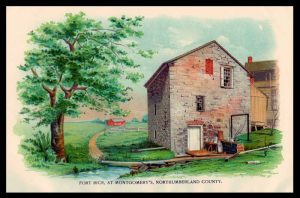
Fort Rice at Montgomery’s, Northumberland County, Pennsylvania

Fort Rice, at Montgomerys, Northumberland County

Fort Rice, also known as Montgomery’s, is located in Lewis Township, Northumberland County, Pennsylvania. Established in 1771 by Captain William Rice, it served as a military fort during the American Revolutionary War. The site was originally part of a 700-acre land patented by William Patterson, who named it “Paradise” due to its beauty and fertility. After the destruction of John Montgomery’s home by Native Americans in 1779, the fort was built nearby. The structure remains a significant relic of local history.

Fort Wheeler, Columbia County, Pennsylvania

In April 1778, Lieut. Moses Van Campen led a detachment to construct Fort Wheeler on the farm of Mr. Isaiah Wheeler in response to increasing Indian raids. The fort, built of stockades, aimed to protect local settlers from imminent attacks. Despite an assault by Native Americans during the construction, the fort was completed and served as a refuge. Notable events included a defensive engagement in June and subsequent occupancy by settlers and troops. The fort’s site remains recognized by descendants, although it is now unmarked.

Fort Freeland, Northumberland County, Pennsylvania

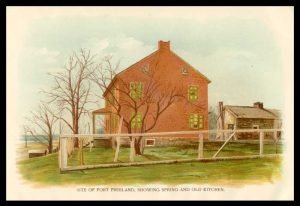
Site of Fort Freeland, Showing Spring and Old Kitchen

Fort Freeland, nestled on Warrior Run in Northumberland County, was established in 1778 by Jacob Freeland and neighboring settlers as a refuge during increasing Indian hostilities. The fort, encompassing a two-story log house, served its purpose until July 21, 1779, when it was attacked, resulting in the death and capture of many settlers. After a brief siege and subsequent capitulation, the fort was abandoned and burned. The fall of Fort Freeland marked a significant setback for local defense against enemy incursions, leaving surrounding settlements vulnerable.

Fort Horn, Clinton County, Pennsylvania

Fort Horn, located on the West Branch of the Susquehanna River in Wayne Township, Clinton County, served as a refuge for settlers during the late 18th century. Established by Samuel Horn, the stockaded fort provided protection from conflicts with Native Americans during the Revolutionary War. The settlers, primarily Scotch-Irish, formed a communal code for law and order. Notable events include the Pine Creek Declaration of Independence in 1776, where local settlers declared their freedom from British rule, reflecting their strong desire for independence. The fort ultimately fell into disuse after the Big Runaway in 1778, when settlers evacuated to escape imminent attacks.

Fort Menninger, Union County, Pennsylvania

Fort Menninger, built in 1778 near White Deer Mills, served to protect the mill and the surrounding area. The fort was part of an irregular triangle featuring a stone house established by Widow Smith, which became vital for local industry, producing gun barrels during the Revolutionary War. Abandoned during the Big Runaway in 1779, it was later destroyed by Indians. Widow Smith’s efforts to rebuild essential mills faced significant challenges, reflecting the hardships of the frontier life in post-war Pennsylvania.

Fort Muncy, Lycoming County, Pennsylvania

Fort Muncy, established in 1778 by Col. Thomas Hartley near Halls station, served as a crucial stronghold during the American Revolutionary War. Originally intended to protect settlers and maintain order, it faced destruction by Native American raids twice during its existence. Each time, efforts were made to rebuild it, reflecting its strategic significance in safeguarding the surrounding frontier. The fort’s location near a vital spring contributed to its importance, though it ultimately struggled due to a lack of resources and manpower during critical periods.

Fort Reed at Lock Haven, Clinton County, Pennsylvania

Fort Reed, located in Lock Haven, Pennsylvania, served as a crucial defensive point for settlers during the American Revolutionary War. Established in 1777, this stockaded fort provided refuge and a rallying point against Indian attacks, which were often swift and strategic. Its strategic position covered the Bald Eagle Valley and the Susquehanna River. The fort was manned intermittently by militia and played a significant role in protecting the surrounding settlements. Historical accounts affirm the site’s importance and its enduring legacy in the region’s defense against frontier conflicts.

Fort Boone and Fort Swartz, Northumberland, Pennsylvania

Boone’s Fort, located on Muddy Run near the Susquehanna River, was a stockaded gristmill owned by Capt. Hawkins Boone, a respected figure who defended the area until his death at Fort Freeland in 1779. His loss was deeply felt by the community. Meanwhile, Fort Swartz, a log structure named after Lieut. Christian Godfried Swartz, was established above Milton to protect against threats. Though not attacked, it served as a vital lookout point and was garrisoned by militia after the German Battalion departed.

Fort Bosley or Bosley’s Mills, Montour County, Pennsylvania

Fort Bosley, located at the forks of the Chillisquaqua River in Montour County, Pennsylvania, was established by Mr. Bosley in 1773. Initially a gristmill, it was fortified around 1777 due to Native American threats and served as a refuge for settlers. Garrisoned by a small troop, it played a crucial role in local defense, particularly after the fall of nearby Fort Freeland. It became a key logistical point for families during alarms and remains significant in the area’s history.

Fort Brady, Lycoming County, Pennsylvania

Fort Brady, established by Capt. John Brady in Muncy, served as a refuge during the Revolutionary War. Brady, a veteran of the Scotch-Irish and German forces, stockaded his home for protection against Indian attacks. He actively led defense efforts until his assassination by Indians on April 11, 1779. His legacy continued through his sons, who became notable figures in the fight against Native American threats. The fort’s location remains marked, signifying its historical importance in the region’s turbulent past.

Fort Jenkins, Pennsylvania

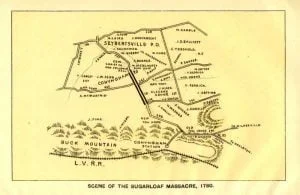
Scene of the Sugarloaf Massacre - 1780

Fort Jenkins, established in late 1777 or early 1778, served as a critical defense point during the American Revolutionary War along the North Branch of the Susquehanna River. Built around the residence of Mr. Jenkins, it housed a garrison of approximately thirty men. The fort was pivotal in protecting nearby settlers from Indian raids. In September 1780, after the fort was abandoned during a concerted enemy attack, it was burned, marking its decline as a secure location for settlers amidst ongoing conflicts.

Fort Antes, Lycoming County, Pennsylvania

Fort Antes, built in 1778 by Lieut. Col. Henry Antes near the Nippenose Creek, served as a crucial stronghold during the Indian hostilities of the Revolutionary War. Col. Antes defended the fort until ordered to abandon it due to safety concerns, facing significant peril from ongoing Indian attacks. The fort provided refuge for settlers and operated as a military outpost, reflecting the tumultuous conflicts of the era. Although the structure has since vanished, it remains a significant historical marker in Lycoming County, remembered for its role in early American frontier defense.

Fort Augusta at Sunbury, Pennsylvania

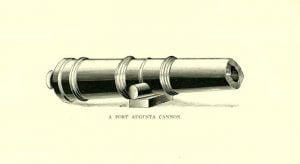
A Fort Augusta Cannon

Fort Augusta, constructed in 1756 near Sunbury, Pennsylvania, served as a critical military stronghold during the French and Indian War. Its strategic location at the fork of the Susquehanna River allowed it to control access by both land and water, protecting settlements from French and Indian raids. Initially armed with twelve cannons, Fort Augusta remained vigilant until the end of the war, after which it faced neglect. Despite challenges, it became essential during the Revolutionary War, reflecting ongoing tensions and the need for frontier defense.