History of Natrona County, Wyoming

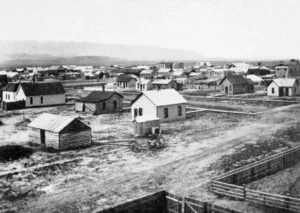
Casper Wyoming in 1894

For individuals researching ancestors who lived in Natrona County between 1888 and 1922, this book offers valuable context and potential leads. It includes names of county officials, war veterans, pioneers, and individuals involved in notable local events, as well as detailed accounts of institutions such as schools, churches, newspapers, and civic organizations. Descriptions of towns, industries, and public records provide insight into the communities where ancestors may have lived or worked. While not a genealogical record in and of itself, the book’s extensive local detail can help place family histories within the broader social and economic framework of the time. And who knows, perhaps your ancestor was one of the more colorful citizens portrayed…
WYGenWeb – Wyoming GenWeb

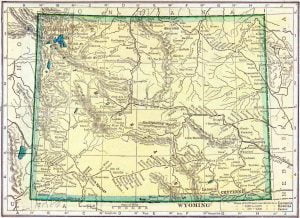
1910 Wyoming Census Map

WYGenWeb is created by a group of volunteers as part of the USGenWeb Project working together to provide free genealogy websites for genealogical research in every county in Wyoming. This Project is non-commercial and fully committed to free genealogy access for everyone.

Genealogy Along the Rockies

Genealogy Along the Rockies was a website created by Mary and Don Saban, serving as a regional hub for genealogical research related to the Rocky Mountains. The site featured a traditional HTML design, complete with animated gifs and genealogy affiliate ads, but also contained valuable genealogical information. Mary Saban, the primary genealogist, actively posted her family tree and other resources until her passing on December 20, 2017, which led to the website’s end. The domain was later repurposed by a restaurant in Melbourne, Australia, named Genealogy Coffee & Wine Bar, which has since closed. This article explores the original website’s content and provides links to alternative genealogy resources for the defined Rocky Mountains region.

Wyoming’s Pioneer Ranches

The Newman Ranch on the Niobrara, about 1886.— Photo by courtesy P. H. Waddill of Gordon, Nebraska

Wyoming’s Pioneer Ranches aims to capture the essence of the people who shaped the Laramie Plains. It portrays their courage and cowardice, faith and skepticism, vision and blindness, responsibility and recklessness, humility and pride, kindness and cruelty, fortune and misfortune, competence and ineptitude. If this narrative manages to convey these diverse human experiences, then it will have successfully used the authors’ inherent talents to chronicle the history of one of Wyoming’s and the West’s significant natural landscapes. The saying “Grass Makes Wyoming and Wyoming is the West” captures the essence of this unique region.

The Evangelical Lutheran Church, 1860-1960

The Evangelical Lutheran Church, 1860-1960

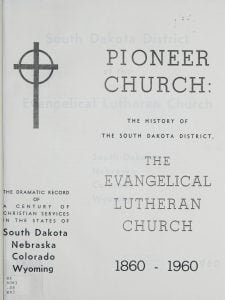
“Pioneer Church: The History of the South Dakota District, the Evangelical Lutheran Church, 1860-1960” is a meticulously crafted chronicle that delves deep into the roots of Lutheran Christianity across South Dakota, Nebraska, Colorado, and Wyoming. Spanning a century, this volume unfolds the vibrant narrative of faith, community, and relentless dedication to the service of God and humanity in a region marked by its pioneering history. Free to read or download.

Revolutionary War Pension and Bounty Land Warrants

Civil War Cannon

This article helps you access the Revolutionary War Pension and Bounty Land Warrants for free. Following two simple steps, one to search, and the other to browse the actual microfilms, you can quickly find your ancestors Revolutionary War pension record, or Bounty-Land record and download the images. During 1800-1900 the United States issued more than 80,000 pensions and bounty-land-warrants to soldiers of the Revolutionary War, their spouse, or their children. Was your ancestor one of them?

United States Bureau of Land Management Tract Books, 1800-c. 1955

record-image_3QS7-89W3-39QL-W

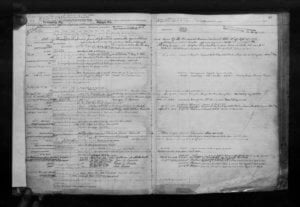
3,907 land management tract books containing official records of the land status and transactions involving surveyed public lands arranged by state and then by township and range. These books indicate who obtained the land, and include a physical description of the tract and where the land is located. The type of transaction is also recorded such as cash entry, credit entry, homesteads, patents (deeds) granted by the Federal Government, and other conveyances of title such as Indian allotments, internal improvement grants (to states), military bounty land warrants, private land claims, railroad grants, school grants, and swamp grants. Additional items of information included in the tract books are as follows: number of acres, date of sale, purchase price, land office, entry number, final Certificate of Purchase number, and notes on relinquishments and conversions.

Chronicling America Historical Newspapers

Winchester Star

Chronicling America is a Website providing access to information about historic newspapers and select digitized newspaper pages, and is produced by the National Digital Newspaper Program (NDNP). NDNP, a partnership between the National Endowment for the Humanities (NEH) and the Library of Congress (LC), is a long-term effort to develop an Internet-based, searchable database of U.S. newspapers with descriptive information and select digitization of historic pages. Supported by NEH, this rich digital resource will be developed and permanently maintained at the Library of Congress. An NEH award program will fund the contribution of content from, eventually, all U.S. states and territories.

Wyoming World War 2 Casualties – Army, Air Force

World War 2 Casualties - Army, Airforce

This database contains War Department casualties (Army and Army Air Force personnel) from World War II for Wyoming. Information provided includes serial number, rank and type of casualty. The birthplace or residence of the deceased is not indicated. An introduction explaining how the list was compiled, a statistical tabulation, and the descriptions of the types of casualties incurred are also included.

Small Town Newspapers

Winchester Star

Small Town Papers gives you access to the people, places and events recorded in real time over the decades or even centuries! Browse and search the scanned newspaper archive from 1846 up to the current edition! Their archives contain millions of names of ancestors not found anywhere else. Enhance your Ancestry research with their high resolution scanned newspaper archive. Find distant relatives and discover your ethnic heritage by reading the articles about family and friends written back in the day.

History of Arapaho and Cheyenne Treaties

Land Cession 477, 426-3

These treaties were instrumental in establishing and defining the relationship between the United States and the Arapaho and Cheyenne Confederation. They also impacted the history of the tribe after it signed the initial treaty of 1825. Each succeeding treaty will show the historian a shrinking land mass controlled by the Arapaho and Cheyenne. Includes land cession maps detailing the land ceded by the Arapaho and Cheyenne.

Scenes at Fort Laramie

Fort Laramie presented a vibrant yet complex scene in the midst of its diverse inhabitants, including Native Americans, traders, and trappers. The fort, a critical post of the American Fur Company, functioned under a fragile peace as it housed both Indigenous families and incoming emigrants. Encounters between the two groups revealed cultural tensions and misunderstandings exacerbated by fear and suspicion. The arrival of new emigrants heightened these complexities, leading to strife as the Dakota demanded feasts and exhibited growing insolence toward the settlers.

Wyoming Genealogy at Ancestry

Ancestry offers an extensive collection of Wyoming genealogy resources, featuring records from various periods, including census data, city directories, and military histories. While some databases are accessible for free, many require a subscription. Users can explore their ancestry through a complimentary 14-day trial. Key resources include grave indexes, biographical sketches, and local histories, aiding researchers in uncovering their Wyoming roots.