
Aboha Kullo Humma

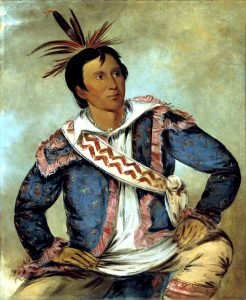
Aboha Kullo Humma, the chief of Okla Hunnali, advocated for education within the Choctaw Nation in 1822. He established laws to curb alcohol use among warriors, punish infanticide, and address theft and marital infidelity. His longing for schools reflects a broader desire among Indigenous communities for education and civilization. Despite their efforts, the Choctaws faced relentless encroachment on their lands and culture by settlers. Aboha Kullo Humma’s plea illustrates the challenges and aspirations of Native Americans during this turbulent period in history.
Memoirs of John Pitchlynn

Peter Perkins Pitchlynn was the Choctaw Principal Chief from 1864-1866

John Pitchlynn was a notable figure in the Choctaw Nation, recognized as a benefactor who integrated into their society by marrying a Choctaw woman and serving as an interpreter for the U.S. government. He gained the respect of both the Choctaws and missionaries through his moral conduct. His son, Peter P. Pitchlynn, became a prominent leader and advocate for education and peace among tribes, notably facilitating a treaty with the Osages. Known for his integrity and leadership, Peter’s legacy reflects the potential for collaborative progress within Native communities.

Missionaries among the Native Americans

Missionaries, notably Rev. Cyrus Kingsbury, began their work among the Choctaws in 1818, establishing the first Protestant mission in the region. Initially met with goodwill, the missionaries faced challenges, including local superstitions, exemplified by the tragic killing of a woman accused of witchcraft. Over time, the missionaries gained the trust of the Choctaws, promoting education and moral teachings. Their efforts led to the formation of schools, churches, and local governance, fostering a significant spiritual and social transformation among the Choctaw Nation.

Tunapinachuffa

Tunapinachuffa, an aged Choctaw man, became the first known convert among his people, showcasing profound transformation through Christianity. His public declarations of faith and heartfelt letters inspired others, including the chief, Col. David Folsom. His conversion heralded significant changes, with increased industry, cotton cultivation, and moral reform throughout the Choctaw Nation. This spiritual awakening led to widespread gatherings for worship and the establishment of new churches, marking a pivotal shift from their ancient customs toward a community united in faith and productivity.

Biography of Paul Brigham

Hon. Paul Brigham, born January 17, 1746, in Coventry, Connecticut, served as a Captain in the Continental Army from January 1777 to April 1781, participating in significant battles such as Germantown and Monmouth. After marrying Lydia Sawyer in 1767, he moved to Norwich, Connecticut, in 1782, where he built a notable residence on Brigham Hill. Brigham’s commitment to his country and his community is well-documented, with a diary providing insights into his experiences during the Revolutionary War. He died in 1810.

Biographical Sketch of Nathaniel Kingsbury

Nathaniel Kingsbury was an early settler in the northern part of his town and married four times. He had eleven children, including his son Abijah, who married Abigail Wilder. Another son, Josiah, married Eloise Taft and lives in Keene. Josiah’s grandfather, William Black, was a Revolutionary War pensioner, and Josiah possesses some of the continental money paid to him.

Biographical Sketch of Charles Franklin Kingsbury

Charles Franklin Kingsbury, born on June 11, 1824, in Gilsum, was the son of William and Temperance Kingsbury. He worked on the family farm until age twenty, striving for education by teaching in winter. Kingsbury attended Norwich University and studied medicine under Dr. James G. Murphy, earning his M.D. from Dartmouth in 1855. He practiced in Gilsum, Stoddard, and finally Lyme, where he established a successful medical career. Kingsbury held various public offices and married Sarah A. Pierce, with whom he had one daughter, Ella.

Biographical Sketch of Col. Cyrus Kingsbury

Col. Cyrus Kingsbury, originally from Worcester, Massachusetts, settled in Alstead in 1785. He had two wives, Annas S. Taynter and Philete Partridge, and fathered six children. A military officer, he served as deacon in the Baptist church and held various town offices. In 1814, he moved to Bloomfield, New York, where he later died. His son, Cyrus, Jr., overcame health challenges to become a missionary to Western Indians, while his half-brother, Joseph, remained in Alstead and was active in local politics until his death in 1865.

Biographical Sketch of Absalom Kingsbury

Absalom Kingsbury, originally from Coventry, Connecticut, settled in Alstead in 1771 and later moved his family there. He had ten children with his first wife, Rebecca Rust, and later married widow Wilson. His sons included Asa, a Revolutionary soldier, and Ephraim, who managed the family farm. Absalom held various civic roles, including justice of the peace and treasurer, and played a key role in establishing the town’s first church.

Biography of Selden B. Kingsbury

Selden B. Kingsbury, born on October 29, 1842, in Ohio, has practiced law in Idaho for eighteen years, residing in Boise. A Civil War veteran, he served with the Seventh Ohio Volunteer Infantry and was captured and imprisoned before returning to education and law. Kingsbury’s legal acumen is distinguished, and he is known for his integrity and dedication to client interests. He married Hulda C. Corning in 1865, with whom he has five children and has established a prominent social presence in Boise.

Biographical Sketch of Edward W. Kingsbury

Edward W. Kingsbury, born on January 15, 1870, in Newark, Ohio, was the son of Wilson Webb and Mary Ellen Little Kingsbury. He received his education in Newark and Canton, eventually becoming a bookkeeper. Kingsbury worked as a commercial traveler for The Scandinavia Belting Co. for four years before managing their Cleveland branch starting January 1, 1913. He moved to Cleveland in 1904 and was a member of Elks Lodge No. 18 and various Commercial Travelers Associations.

Biographical Sketch of Rev. Charles A. Kingsbury

Rev. Charles A. Kingsbury, born in Newton, Massachusetts, in 1839, was the son of Isaac Kingsbury, a long-time market gardener. Educated at Williams College and Union Theological Seminary, he served as a Congregational pastor before marrying Mary Augusta Donaldson in 1875. In 1889, seeking improved health, Kingsbury relocated to Redlands, California, where he built a notable residence with expansive views of the San Bernardino valley. They have one son, Homer Penfield Donaldson Kingsbury.