
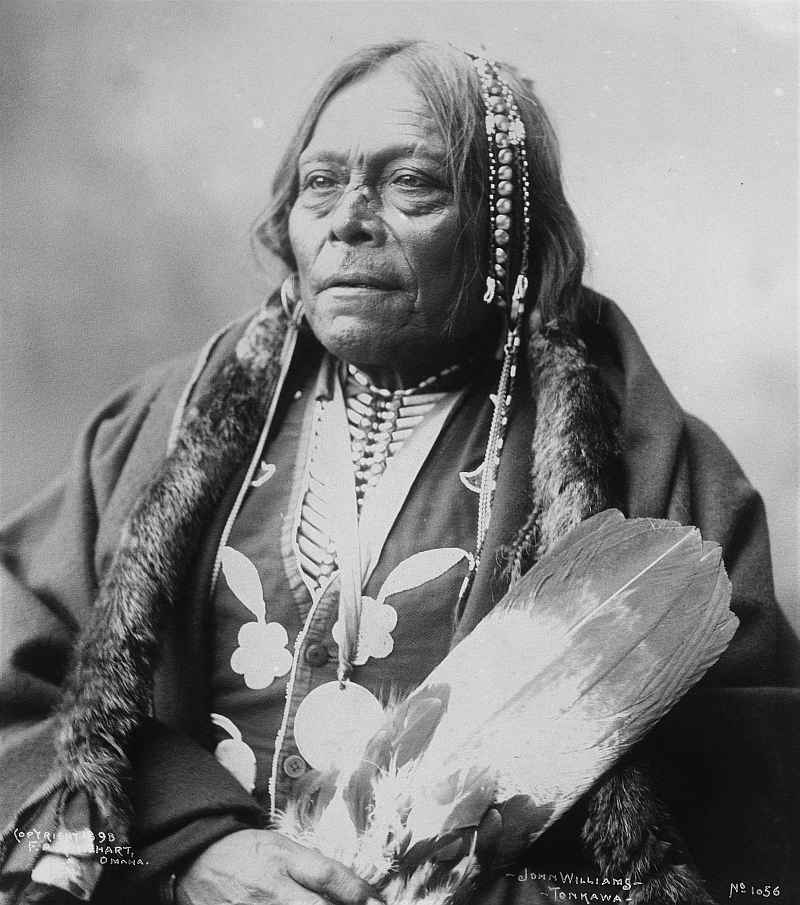
Tonkawa Indians. A prominent tribe, forming the Tonkawan linguistic family, which, during most of the 18th and 19th centuries, lived in central Texas. According to Gatschet 1 they call themselves Titskan wátitch, while the name Tonkawa is a Waco word, Tonkawéya meaning ‘they all stay together.’
Tonkawa Tribe Ethnology
The ethnological relations of the tribe are still obscure. It has been surmised that it was a composite of the remnants of other tribes, and this is apparently true of their later organization at least; yet the fact that their language and culture were so different from those of the great neighboring groups indicates that fundamentally they were a distinct people. Closely associated with them, and of similar culture, were lesser tribes or subtribes, notably the Yojuane, Mayeye, and Ervipiame. It has recently been established by a study of the records of the San Xavier missions that these tribes spoke the Tonkawa language, but that the Deadoses (Agdocas, Yadocxas), who were often associated with the Tonkawa, spoke the language of the Bidai and Arkokisa. The Yojuane and Mayeye were apparently in part absorbed by the Tonkawa in the later part of the 18th century. The Yakwal (Yakawana), remembered in Tonkawa tradition 2 , were very probably the Yojuane. There was, besides these, a large group of lesser tribes on the border between the Tonkawan and Coahuiltecan territories, notably the Sana, Einet, Cavas, Toho, and Tohaha, who, we are told in positive terms by competent early witnesses, did not speak the Coahuiltecan language. There is strong probability that a study of the surviving fragments of their language will prove them also to have been Tonkawan 3 . Some of the traditions of the Tonkawa point to an early residence on the Gulf coast, but their language does not bear the marks of such a birthplace.
Until the 19th century the Tonkawa were almost always hostile to the Lipan and other Apache tribes, and this fact kept them generally at peace with the Comanche, Wichita, and Hasínai, whom they often joined in Apache wars. They were usually friendly also with the Bidai, Arkokisa, and Xaraname (Aranama) to the south, and with the numerous Coahuiltecan tribes to the south west. Relations with the Comanche and Wichita were frequently strained, however, even during this period. In the 19th century relations with these groups were reversed, the Tonkawa then being usually friendly with the Lipan and hostile toward the Comanche and Wichita. When, about 1790, the Apache effected an alliance with the Bidai, Arkokisa, and Attacapa, the Tonkawa were brought into hostile relations with these tribes 4 .
Tonkawa Tribe’s Relations with French and Spanish
In 1691 Francisco de Jesus Mar a unmistakably included this tribe and their associates, the Yojuane, in his list of enemies of the Hasínai, writing the names “Tanquaay” and ”Diujuan” 5 . The Tonkawa seem not to be mentioned again unti11719, but the Yojuane appear in the interim, when, about 1714 (the chronology is not clear), they destroyed the main fire temple of the Hasínai 6 . To the French the Tonkawa became definitely known through La Harpe’s expedition of 1719. His lieutenant, Du Risage, reported that 70 leagues up Red river from the Kadohadacho he met several tribes, which he called respectively the Tancaoye, Joyvan (Yojuan), Quidehais (Kichai?), Naouydiches (Nabedache?), Huanchané, and Huane. They were wanderers, following the buffalo for a living. Famous warriors all, the “Tancaoye” were the most renowned, and their chiefs bore many battle scars. They were just returning from a war with the Apache, which fact, together with the tribal names given, makes it seem probable that the party was a composite one of Caddoan and Tonkawan tribes, such as in later times frequently went against the Apache. From this time forth the Tonkawa were generally friendly with the French 7.
With the Spaniards the Tonkawa first came into intimate contact through the establishment of the missions on San Xavier (San Gabriel) river, Texas. As early as 1740 the missionaries had thought of taking them to San Antonio, but considered them too remote 8 . Between 1746 and 1749 three missions were planted on the San Xavier, and among the tribes there were the Mayeye, Yojuane, and Tonkawa 9 . While there they suffered from a terrible epidemic of smallpox and from Apache raids. On the other hand, they deserted the missions to go with the Hasínai against the Apache, and got the Spaniards into trouble by selling Apache captives to the Hasínai. By 1756 these missions were abandoned and the protecting garrison was transferred to the new Lipan mission of San Sabá. In common with the other foes of the Apache, the Tonkawa were converted into enemies of the Spaniards by the establishment of this mission for the Lipan, and they took part in its destruction in 1758.
Tonkawa Tribe Habitat
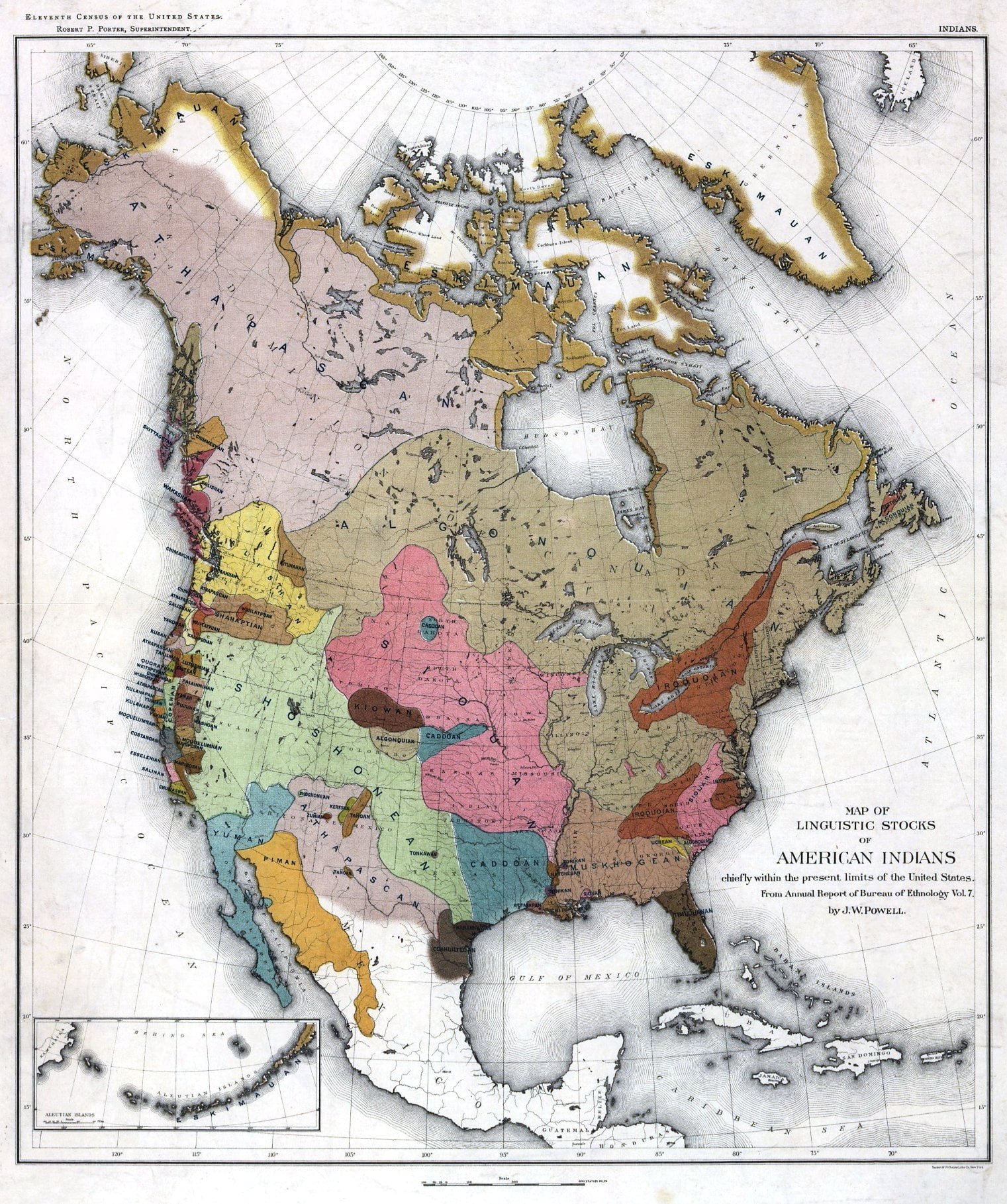
It has not been possible to determine with confidence the range and headquarters of the Tonkawa before the decade between 1770 and 1780, when the reports become full and satisfactory. At this tine their customary range was between the middle and upper Trinity on the north east, and the San Gabriel and the Colorado on the south west, rather above than below the San Antonio road. Their favorite headquarters were about halfway between Waco and the Trinity crossing of the San Antonio road, near an eminence known to the natives as the Turtle 10 11 . Since they first became known, the Tonkawa had perhaps drifted gradually southward, though this is not certain. It was true of the Wichita tribes for the same period, and would be logical consequence of pressure by the Comanche and the Osage. Yet the testimony before 1770 is not conclusive. Du Rivage saw the Tonkawa near Red river, but this may have been a temporary location. In 1740 they and the Yojuane were reported to he “not far from [the] Texas,” but whether west or north we are not told. When in 1752 De Soto V’ermudez inquired of the Nasoni, on the upper Angelina, what tribes lived to the northward, he was told that 20 leagues away (northward by the implication of the question ) were the Tebancanas (Tawakoni), and that beyond them followed the Tancaguies and Yojuanes. If the direction was correctly given as northward, the Tonkawa were then clearly farther north than their central rendezvous of a later date. Similarly a copy of the La Fora map (ca.. 1767), but not the original, shows the Yojuane village to have been near the upper Sabine, but the source and the date of this annotation are not known. On the other hand, as has been shown after 1746 the Tonkawa and Yojuane frequented the missions on the San Gabriel, associating there with related tribes native of the locality, which would indicate that it was within the usual Tonkawa range. Moreover, when in 1768 Solís crossed Texas from Béxar to Nacogdoches, he noted in his diary after passing the Brazos that in this neighborhood lived Tancagues, Yojuanes, and Mayeves. It would seem, therefore, that when Mezières wrote, the country of the Turtle had for some time been for the Tonkawa the middle of a long range from north east to south west. After this time, as the Apache receded, there was apparently considerable southwestward extension of their range, though for some years they had headquarters east of the Brazos. It is to be noted that writers have usually erred by calling the Tonkawa a southwestern Texas tribe, which was not true for a century after they came into history. On the other hand, the location assigned them on Powell’s linguistic map applies only to the latter part of the 19th century 12 .
Tonkawa Tribe Customs
The Tonkawa always bore a bad reputation among both Indians and whites, although toward the Americans they were uniformly at peace The characteristics assigned to them by Du Rivage in 1719 are those most frequently mentioned in later times, when they became better known. They were warlike wanderers, planting few or no crops, living on game, and following the buffalo long distances. When hard pressed they could eat food usually considered revolting. Their general reputation as cannibals is borne out be concurrent tradition and history, by their designation in the sign language, and by the names applied to them by other tribes. Mezières said of them that they were despised by other tribes as vagabonds, ill-natured, and disposed to thievery, a character frequently given them in later times. They lived in scattered villages of skin tipis, which they moved according to the caprice of the chiefs or the demands of the chase. In the 18th century they were fine horsemen and had good animals. Their offensive weapons then were firearms, bows and arrows, and the spear; their defensive arms were the leather jacket (cuera), shield, and cap or helmet, on which they often wore horns and gaudy plumage.
Once, when in their midst, Mezières wrote a statement of their dependence on the buffalo that deserves to be recorded. “Besides their meat,” he said, “it furnishes them liberally what they desire for conveniences. The brains are used to soften skins, the horns for spoons and drinking cups, the shoulder-blades to dig up (cavar) and clear off the ground, the tendons for thread and bowstrings, the hoof to glue the arrow-feathering. From the tail-hair they make ropes and girths; from the wool, belts and various ornaments. The hide furnishes saddle and bridle, tether ropes, shields, tents, shirts, footwear, and blankets to protect them from the cold.” They were great deer as well as buffalo hunters, and when their buffalo range was partly cut off by the Comanche, their dependence on this animal increased. A trader informed Sibley in 1805 that he had obtained from the Tonkawa as many as 5,000 deerskins in one year, besides tallow, robes, and tongues. Their market for hides in earlier times had usually been the Tawakoni villages 13 .
Spanish Relations after 1770. For about 15 years after the failure of the San Xavier missions, the Tonkawa were regarded by the Spaniards as open enemies; but in 1770 an equal period of nominal peace began, during which the Spanish policy toward the tribe was marked by three main features:
- To win their good-will by friendly visits and by sending them authorized traders with supplies.
- To force them to keep peace with the Tawakoni, Yscani, and Kichai, who were relied on to restrain the Tonkawa by good example or coercion.
- To induce them, by persuasion and by threats of withdrawing the traders, to abandon their vagabond life and settle in a fixed village.
The principal agents in this work were De Mezicres, Gil Ybarbo, Nicolás de la Mathe, and Andres de Courbière, all but one Frenchmen from Natchitoches, it will be noted. Their efforts at coercion through trade were evidently made nugatory by clandestine French traffic that could not be stopped.
Failure to successfully effect these policies was charged to the bad influence of the noted Tonkawa chief of the day, Torque, or El Mocho. He was an Apache by birth, who had been captured and adopted by the Tonkawa. During one of his exploits against the Osage he had lost his right ear, whence his nickname, El Mocho, ” the maimed ” or “cropped.” By his prowess in war and his eloquence in council he raised himself to a position of influence. Chance, in the form of an epidemic, occurring in 1777-78, removed his rivals and left him head chief. His baneful influence before this had won him the enmity of the Spaniards, and Mezicres, under official orders, had bribed his rivals to assassinate him, but he was saved by the epidemic mentioned. Now resort was had to flattery and gifts. In 1779 Mezières held a long and loving conference with El Mocho at the lower Tawakoni village, and the result was that they went together to Bexar to see the governor. There, on Oct. 8, 1779, in the presence of more than 400 Tonkawa people, Governor Cabello with great ceremony appointed El Mocho “capitan grande” of his tribe, decorating him with a medal of honor, and presenting him a commission, a uniform, a baston, and a flag bearing the cross of Burgundy. In return, of course, E1 Mocho made grave promises to obey and to form the desired pueblo 14 .
The promise to settle down, however, remained unfulfilled, while El Mocho’s insincerity was still further proved by events of 1782. In that year the Lipan, Mescaleros, and Apache, as the records give the names, desirous of better means of acquiring arms, made overtures of peace to the Tonkawa, who easily obtained weapons from the French. El Mocho consented to a meeting. The place appointed was the bank of Guadalupe river; the time, the moons of November and December. Cabello, unable to prevent the gathering, sent a spy in Indian disguise-probably the great Indian linguist and interpreter, Andrés de Courbiere who reported the proceedings in detail. According to him, more than 4,000 Indians attended, and the barter of firearms for stolen horses was lively. But the alliance was defeated by El Mocho’s ambitions. He tried to induce the Apache tribes to make him their head chief, in return for which he would rid the country of Spaniards. This self-seeking aroused the jealousy of the Apache chiefs, quarrels ensued, and on Christmas day the meeting broke up without the alliance being effected 15 .
This event, combined with personal jealousies within the Tonkawa tribe, was the undoing of El Mocho, for return was now made by the Spaniards to the policy of assassination. After much intriguing and waiting, El Mocho was taken unawares on July 12, 1784, and murdered in the plaza at Bahía (Goliad), a place fated to be in later days the scene of other equally atrocious deeds. It is to be remarked that for the story of these dark dealings of both the Spanish authorities and their enemy we have only the reports, entirely candid, of the former 16 .
The removal of El Mocho was justified by subsequent events. By June, 1785, Courbière was able to report that the new Tonkawa chief had established a permanent village on Navasota river; and during the next 10 years “the village of the Tancagues” was referred to as though it were a fixed and definite entity. But thereafter the tribe was usually described as wanderers; thereafter, likewise, they were alternately at peace and at war with the Spaniards 17 .
Tonkawa Tribe Population in History
A junta held at Béxar, Jan. 5, 1778, estimated the Tonkawa at 300 warriors. In April of that year Mezières, when on his second visit to the tribe, gave the same figure, including some apostate Xaranaine (Aranama). In Sept., 1779, when again at their settlement, he reported that since the recent epidemic of smallpox there remained 150 warriors. Three years later a spy who spent several days at a gathering of Apache and Tonkawa on Guadalupe river reported that only 600 Tonkawa were present, the rest having remained at home. If he told the truth, he could hardly have meant that these were all warriors. Sibley in 1805 gave their strength at 200 men; Davenport, about 1809, placed it at 250 families, and Terán, 1828, at 80 families. In 1847 the official estimate was 150 men 18 . In the fall of 1855 the Government settled them, together with the Caddo, Kichai, Waco, Tanakoni, and Penateka Comanche, upon two small reservations on the Clear Fork of Brazos river, Texas. In consequence of the violent opposition of the Texans, culminating in an attack upon the agency, the Indians were removed in 1857 to Washita River, Oklahoma, the Tonkawa being temporarily camped about the mouth of Tonkawa river, just above the present Anadarko. In the confusion brought about by the civil war the other tribes saw an opportunity to pay off old scores against the Tonkawa, who were generally hated for their cannibalistic practices as well as for serving as government scouts against the more western tribes. On the excuse that the Tonkawa and their agent were in alliance with the Confederacy, a body of Delaware, Shawnee, and Caddo attacked the Anadarko agency and the Tonkawa camp on the night of Oct. 25, 1862, killing two of the agency employees and massacring 137 men, women, and children out of a total of about 300 of the Tonkawa tribe. The survivors, after some years of miserable wandering, were finally gathered in at Fort Griffin, Texas, to save them from complete extermination by their enemies. In 1884 all that were left 92, including a number of Lipan were removed to Oklahoma, being assigned the next year to their present location at Oakland agency, near Ponca. In 1908 they numbered but 48, including several intermarried Lipan.
The Tonkawa remember a number of subdivisions, which seem to have been subtribes rather than gentes, as follows:
- Awash
- Choyopan
- Haiwal
- Hatchuknni
- Kwesh
- Nilhailai
- Ninchopen
- Pakani
- Pakhalateh
- Sanukh
- Talpkweyu
- Titskanwatichatak

- Karankawa Inds., 37, 1891[↩]
- Gatschet, op. cit.[↩]
- see Sana[↩]
- Gil Ybarbo to Gov. Muñoz, Mar. 22 and Apr. 26, 17911, MS. in Béxar Archives[↩]
- Relación, Aug. 15, 1691, MS[↩]
- Espinosa, Chrónica Apostólica, 424, 1746; see also Dictamen Fiscal, 1716, in Mem. do Nueva España, xxvii, 193[↩]
- La Harpe in Margry, Dec., vi, 277-78, 1886[↩]
- Descripción, 1740, MS. in Mem. do Nueva España, xxviii, 203[↩]
- see San Francisco Xavier de Horcasitas[↩]
- Mezicres, Informe, July 4, 1772: Letter to Croix, May 28, 1778; Gil Ybarbo to Cabello, Dec. 5, 1778; Croix, Relación Particular, 1778, MSS.[↩]
- See Tortugas[↩]
- see Descripción, 1740, op. cit.; De Soto Vermudez, Investigation, MS. in Archivo Gen., 1752; La Fora Map in Dpto. de Fomento, Mexico; Solís, Diario, 518. in Mew. de Nueva España, xxvii, 277; Davenport, Noticia, 1809, MS. in Archivo Gen.; Terán, Noticia, 1828, in Bol. Soc. Geog. Mex., 1890; Powell’s map in 7th Rep. B. A. E.[↩]
- Mezières, op. cit.: Sibley, Hist. Sketches, 1806[↩]
- Cabello, Informe,1784, 61, MS.[↩]
- Cabello, op. cit., 63[↩]
- Cazorla, Capt. of Bahía, to Cabello, July 12, 1784, Archivo General, Fist., vol. c; Cabello to Neve, July 15, ibid.[↩]
- Cabello to Rengel, June 7, 178.5, Bexar Archives; Gil Ybarbo to Governor Muñoz, Mar. 22 and Apr. 26, 1791, Bexar Archives; Leal, Noticia, July 10, 1794, Bexar Archives[↩]
- see Cabello, Informe, 1784, 12, 63; Mezières, Letters to Croix, Apr. 5, 1.778, and Sept. 13, 1779, in Mem. de Nueva Espana, xxvni, 272, 246; Sibley. op. cit.; Davenport, Noticia, co. 1809, SF8_ in Archivo Gen.; Terhn, Noticia, 18218, in Bol. Sec. Geog. Mex., 266, 1870[↩]
