
Micmac Indians, Mi’kmaq First Nation. (Migmak, ‘allies’; Nigmak, ‘our allies.’ Hewitt). Alternative names for the Micmac, which can be found in historical sources, include Gaspesians, Souriquois, Acadians and Tarrantines; in the mid-19th century Silas Rand recorded the word wejebowkwejik as a self-ascription. 1 An important Algonquian tribe that occupied Nova Scotia, Cape Breton and Prince Edward Islands, the north part of New Brunswick, and probably points in south and west Newfoundland. While their neighbors the Abnaki have close linguistic relations with the Algonquian tribes of the great lakes, the Micmac seem to have almost as distant a relation to the group as the Algonquians of the plains 2
Micmac Tribe History
If Schoolcraft’s supposition be correct, the Micmac must have been among the first Indians of the north east coast encountered by Europeans, as he thinks they were visited by Sebastian Cabot in 1497, and that the 3 natives he took to England were of this tribe. Kohl believes that those captured by Cortereal in 1501 and taken to Europe were Micmac. Most of the early voyagers to this region speak of the great numbers of Indians on the north coast of Nova Scotia and New Brunswick, and of their fierce and warlike character. They early became friends of the French, a friendship which was lasting and which the English, after the treaty of Utrecht in 1713, by which Acadia was ceded to them, found impossible to have transferred to themselves for nearly half a century. Their hostility to the English prevented for a long time any serious attempts at establishing British settlements on the north coasts of Nova Scotia and New Brunswick, for although a treaty of peace was concluded with them in 1760, it was not until 1779 that disputes and difficulties with the Micmac tribe ceased. In the early wars on the New England frontier the Cape Sable Micmac were especially noted.
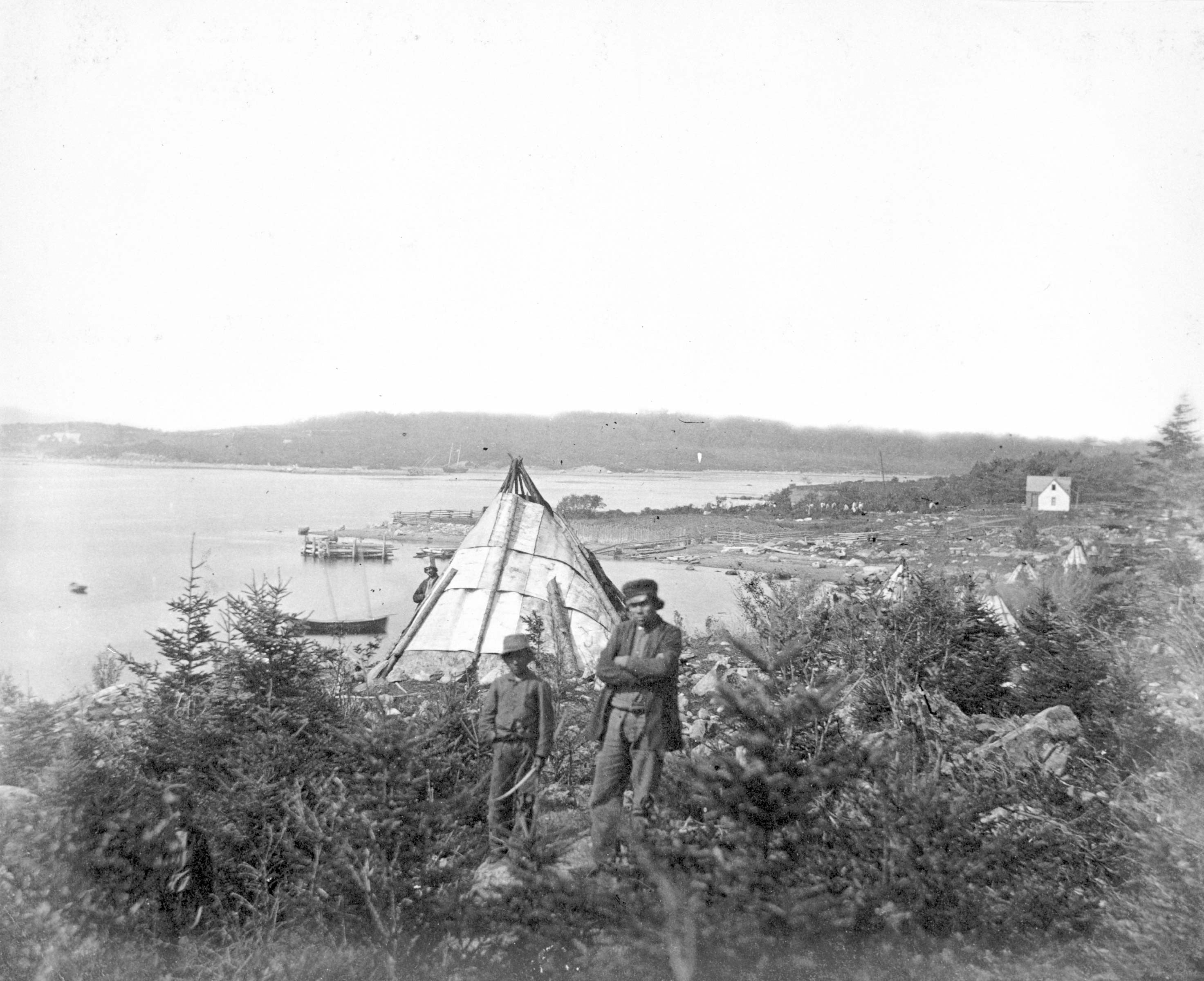
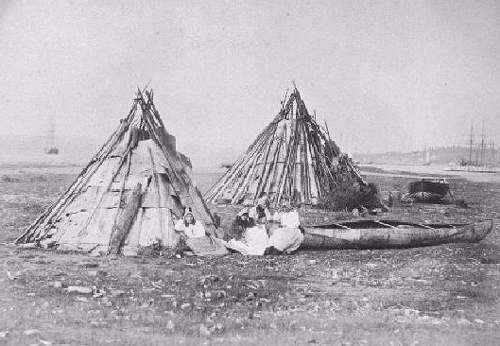
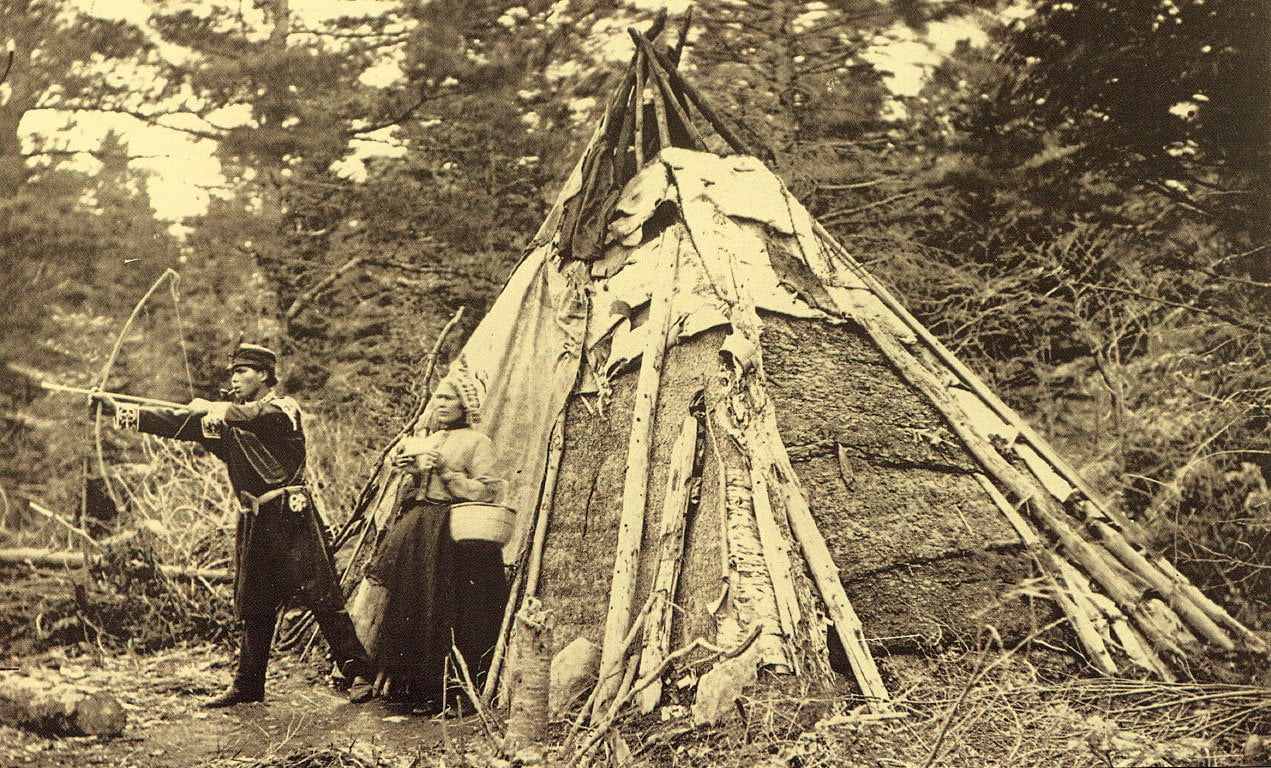
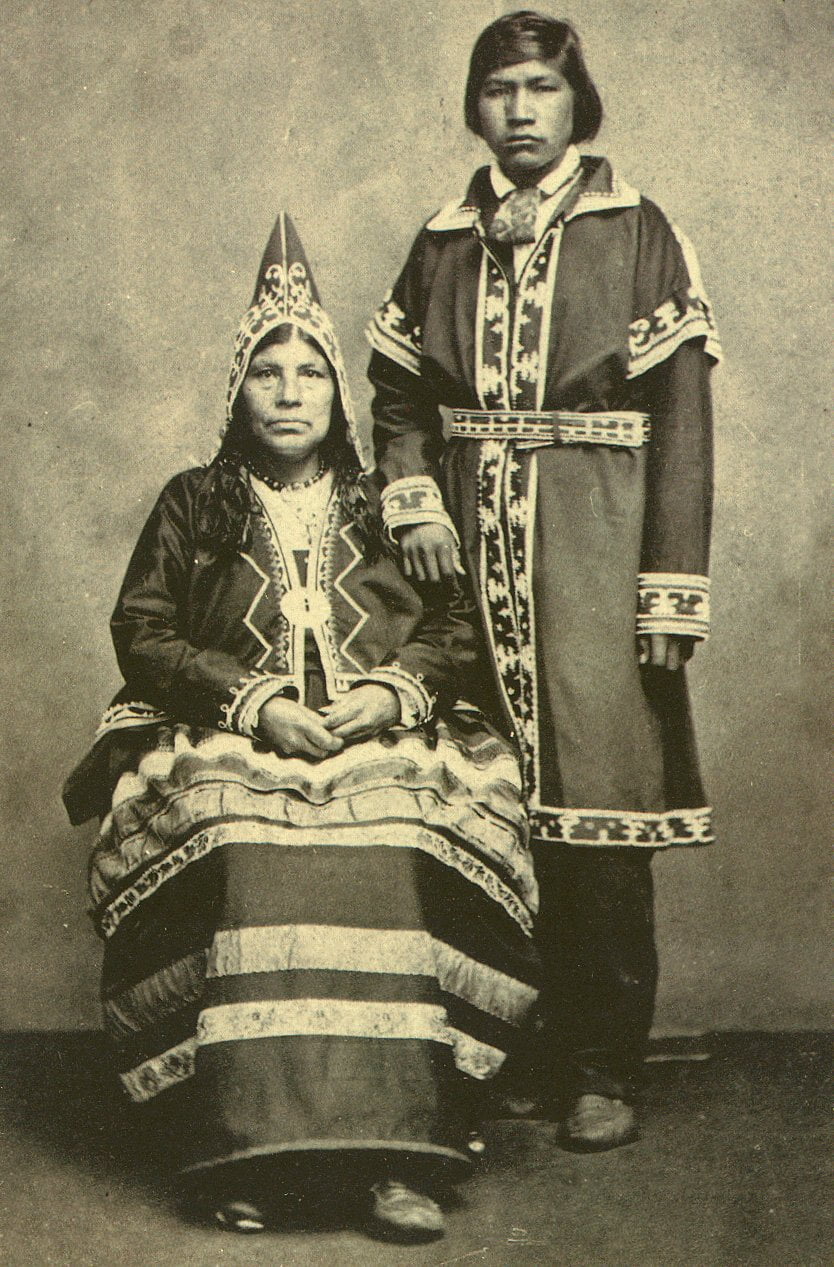
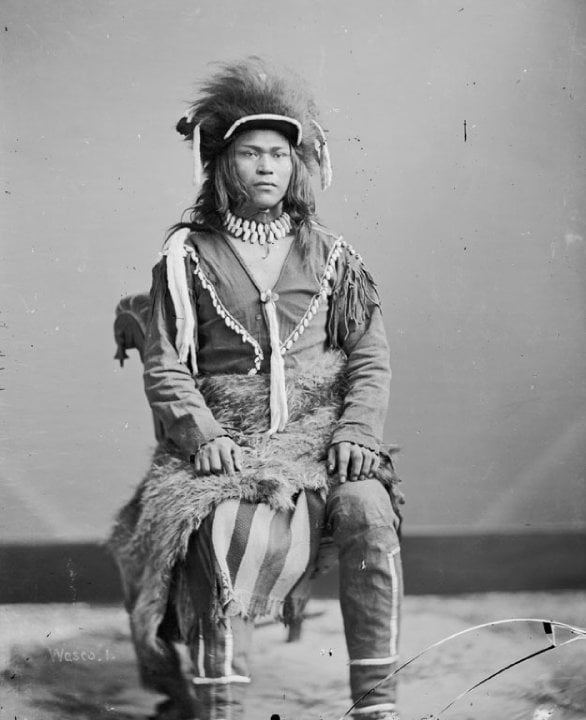
The missionary Biard, who, in his Relation of 1616, gives a somewhat full account of the habits and characteristics of the Micmac and adjacent tribes, speaks in perhaps rather too favorable terms of them. He says: “You could not distinguish the young men from the girls, except in their way of wearing their belts. For the women are girdled both above and below the stomach and are less nude than the men. Their clothes are trimmed with leather lace, which the women curry on the side that is not hairy. They often curry both sides of elk skin, like our buff skin, then variegate it very prettily with paint put on in a lace pattern, and make gowns of it; from the same leather they make their shoes and strings. The men do not wear trousers they wear only a cloth to cover their nakedness.” Their dwellings were usually the ordinary conical wigwams covered with bark, skins, or matting. Biard says that “in summer the shape of their houses is changed; for they are broad and long that they may have more air.” There is all evident attempt to show these summer bowers in the map of Jacomo di Gastaldi made about 1550 given in vol. III of some of the editions of Ramusio. Their government was similar to that of the New England Indians; polygamy was not common, though practiced to some extent by the chiefs; they were expert, canoemen and drew much of their subsistence from the waters. Cultivation of the soil was very limited if practiced at all by them, when first encountered by the whites. Biard says they did not till the soil in his day.
Micmac Divisons

According to Rand 3 they divided their country, which they called Megumage, into 7 districts, the head-chief living in the Cape Breton district. The other six were Pictou, Memramcook, Restigouche, Eskegawaage, Shubenacadie, and Annapolis. The first three of these formed a group known as Sigunikt; the other three formed another group known as Kespoogwit. In 1760 the Micmac bands or villages were given as Le Have, Miramichi Tabogimkik, Pohomoosh, Gediak (Shediac), Pictou, Kashpugowitk (Kespoogwit), Chignecto, Isle of St Johns, Nalkitgoniash, Cape Breton, Minas, Chigabennakadik (Shubenacadie), Keshpugowitk (Kespoogwit, duplicated), and Rishebouctou (Richibucto). The Gaspesians are a band of Micmac differing somewhat in dialect front the rest of the tribe.
Micmac Culture and Life
The Micmacs have a system of communicating while in the woods. Sticks are placed in the ground; a cut on one of them indicates that a message in picture-writing on a piece of birch bark is hidden near by under a stone. The direction in which the stick leans from its base upward indicates that in which the party moved, and thus serves as a convenient hint to those who follow to keep off their hunting grounds.
A game much in use within the wigwams of the Micmacs in former times is that called by some writers altestakun or wŏltĕs takûn. By good native authority it is said that the proper name for it is wŏltĕstōmkwŏn. It is a kind of dice game of unknown antiquity, undoubtedly of pre-Columbian origin. It is played upon a circular wooden dish, properly rock maple, almost exactly a foot in diameter, hollowed to a depth of about three-fourths of an inch at its center. This dish plays an important role in the older legends of the Micmacs.
Another Micmac game is tooādijik or football. The goals were of two sticks placed slantingly across each other like the poles of the traditional wigwam. About a score of players, divided into two parties, faced each other at equal distances from the center of the field. The ball was then rolled in by the umpire, and the object of the game was to kick it between the goal posts. In more recent times a player may catch his opponent by the neck and thus hold him back until he can obtain the ball himself, but scalping was anciently employed as a means of disposing of an opponent.
The choogichoo yajik, or serpent dance, was practiced in early times, but after the introduction of missionaries appeared to be supressed.
- Consult Further: Micmac Customs And Traditions
Micmac Locations
The Micmac historical villages were as follows:
- Antigonishe (?)
- Beaubassin (mission)
- Boat Harbor
- Chignecto
- Eskusone
- Indian Village
- Isle of St Johns
- Kespoogwit
- Kigicapigiak
- Le Have
- Maria
- Minas
- Miramichi
- Nalkitgoniash
- Nipigiguit
- Pictou
- Pohomoosh
- Restigouche
- Richibucto
- Rocky Point
- Shediac
- Shubenacadie
- Tabogimkik
Micmac Settlement at Bay d’Espoir
Bay d’Espoir is a long inlet of the sea, extending up country over a score of miles. The district is hilly, and is covered by a forest of rather small trees, spruce and birch, but further inland the hills are generally bare. There are comparatively few European residents in this bay. The Micmac settlement is on a reservation situated on the eastern side of the Conne arm of the bay. The Reservation, it appears, was laid off for the Micmacs about 1872, by Mr. Murray, Geological Surveyor of the Colony.
Consult Further:
- The Micmac Indians At Bay d’Espoir
The Micmac Indians At Bay d'Espoir is a report made in 1908 by William MacGregor on the state of habitation by the Micmac Indians on their reservation at Bay d'Espoir.
Micmac Language
The northernmost and most divergent of the Eastern Algonquian languages is Micmac or Mi’kmag, spoken by 8,100 4 in the Canadian maritime provinces (Nova Scotia, Prince Edward Island, eastern New Brunswick), the Gaspe of Quebec, Labrador, and now Boston. Some children are still learning the language. There is dialect diversity among communities and age groups, with the greatest differences setting off the Restigouche community in Quebec.
The language of the Micmac Indians is very remarkable. One would think it might be exceedingly barren, limited in inflection, and crude. But just the reverse is the fact. It is copious, flexible, and expressive. Its declension of Nouns, and conjugation of Verbs, are as regular as the Greek, and twenty times as copious. The full conjugation of one Micmac Verb, would fill quite a large volume! In its construction and idiom it differs widely from the English. This is why an Indian usually spoke such wretched English. He thinks in his own tongue, and speaks in ours; and follows the natural order of his own arrangement.
There are fewer elementary sounds in Micmac than in English. The have no r, and no f or v. Instead of r they say l, in such foreign words as they adopt. The name of an hour is in Micmac the same as that of an owl, (kookoogues) because when they first attempted to say hour, they had to say oul, and then they could think of the name of that nocturnal bird in their own tongue, more readily than they could recall a foreign term. 5
The Micmac Language was placed down on paper by Silas T. Rand in the 1870’s in an attempt to aid the Micmac people in learning how to read, and understand English. However, inversely it could be used by white people to learn the Micmac language.
- Consult Further: The Micmac Language
Micmac Population Estimations
In 1611 Biard estimated the Micmac at 3,000 to 3,500. In 1760 they were reported at nearly 3,000, but had been lately much wasted by sickness. In 1766 they were again estimated at 3,500; in 1880 they were officially reported at 3,892, and in 1884 at 4,037. Of these, 2,197 were in Nova Scotia, 933 in New Brunswick, 615 in Quebec, and 292 on Prince Edward Island. In 1904, according to the Report of Canadian Indian Affairs, they numbered 3,861, of whom 579 were in Quebec province, 992 in New Brunswick, 1,998 in Nova Scotia, and 292 on Prince Edward island. The number in Newfoundland is not known.
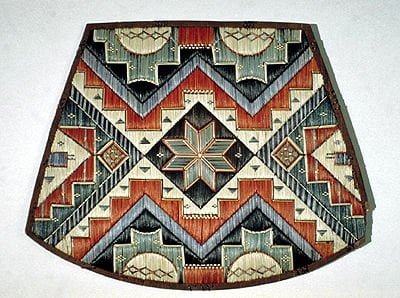
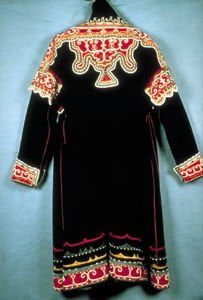
Micmac Photo Gallery

Further Reading
- Rand, Silas Tertius. The Micmac Mission. Hantsport, N.S.? 1882.
- Speck, Frank Gouldsmith. Beothuk and Micmac. New York: Museum of the American Indian, Heye Foundation. 1922.
- Bailey, A.G. The Conflict of European and Eastern Algonkian Cultures, 1504-1700, 2nd ed, 1969.
- McGee, Harold Franklin, Jr., ed. The Native Peoples of Atlantic Canada, 1984.
- Trigger, B.G. ed, Handbook of North American Indians, vol 15: Northeast, 1978.
- Prins, Harald. The Mi’kmaq: Resistance, Accommodation and Cultural Survival, 1996.

- McGee, Harold Franklin, Jr. Micmac-Mi’kmaq, published online in The Canadian Encyclopedia, 2012.[↩]
- W. Jones.[↩]
- Rand, Micmac First Reading Book, 1870,[↩]
- SIL 1996[↩]
- Rand, Silas Tertius. A short statement of facts relating to the history, manners, customs, language, and literature of the Micmac tribe of Indians, in Nova-Scotia and P.E. Island: being the substance of two lectures delivered in Halifax, in November, 1819, at public meetings held for the purpose of instituting a mission to that tribe. 1850.[↩]
