
FootNote
The new kid on the block, FootNote is known for digitizing historical
documents... many of which are genealogical gems. With naturalizations,
city directories, war records, newspapers, town records, etc... this new
kid is quickly being recognized as an alternative to Ancestry.
While we know our northern friends may not feel it, in the South, Spring is
here. So we thought we'd share a few of our gardening sites appropriate
for this time of the year. Along with gardening, there's grilling, and getting
ready to diet so that you can fit back into that bathing suit this summer!
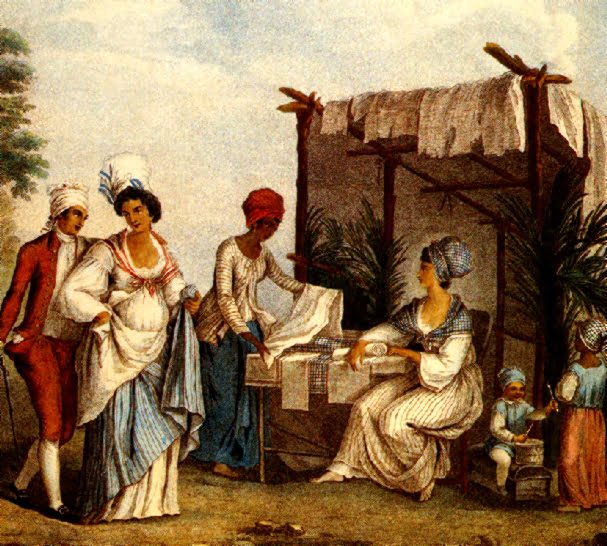
The first white settlers of
Louisiana were French, usually the second born
sons of aristocrats who left France to seek
adventure in the New World. They brought their
traditional style of cooking from the
continent, and being rich aristocrats, they
also brought along their chefs as well! These
Frenchmen came to be called Creoles, and made
up the upper crust of New Orleans. Their
descendents can still be found in the French
Quarter today. This manuscript takes a look at
the history of this unique group of people.
One city in the United States is, without
pretension or Mention, picturesque and
antique. A quaint Southern-European aspect is
encountered in the narrow streets of its early
boundaries, on its old Place d'Armes, along
its balconied facades, and about its cool,
flowery inner courts.
Among the great confederation of States whose
Anglo-Saxon life and inspiration swallows up
all alien immigrations, there is one in which
a Latin civilization, sinewy, valiant,
cultured, rich, and proud, holds out against
extinction. There is a people in the midst of
the population of Louisiana, who send
representatives and senators to the Federal
Congress, and who vote for the nation's
rulers. They celebrate the Fourth of July; and
ten days later, with far greater enthusiasm,
they commemorate that great Fourteenth that
saw the fall of the Bastile. Other citizens of
the United States, but not themselves, they
call Americans.
Who are they ? Where do they live ?
Take the map of Louisiana. Draw a line from
the southwestern to the northeastern corner of
the State; let it turn thence down the
Mississippi to the little river-side town of
Baton Rouge, the State's seat of government;
there draw it eastward through lakes Maurepas,
Pontchartrain, and Borgne, to the Gulf of
Mexico; thence pass along the Gulf coast back
to the starting-point at the month of the
Sabine, and you will have compassed rudely,
but accurately enough, the State's eighteen
thousand seven hundred and fifty square miles
of delta lands.
About half the State lies outside these bounds
and is more or less hilly. Its population is
mainly an Anglo-American moneyed and landed
class, and the blacks and mulattoes who were
once its slaves. The same is true of the
population in that part of the delta lands
north of Red River. The Creoles are not there.
Across the southern end of the State, from
Sabine Lake to Chandeleur Bay, with a
north-and-south width of from ten to thirty
miles and an average of about fifteen, stretch
the Gulf marshes, the wild haunt of myriads of
birds and water-fowl, serpents and saurians,
hares, raccoons, wild-eats, deep-bellowing
frogs, and clouds of insect, and by a few
hunters and oystermen, whose solitary and
rarely frequented huts speck the wide, green
horizon at remote intervals. Neither is the
home of the Creoles to be found here.
North of these marshes and within the bounds
already set lie still two other sorts of delta
country. In these dwell most of the
French-speaking people of Louisiana, both
white and colored. Here the names of bayous,
lakes, villages, and plantations are, for the
most part, French; the parishes (counties) are
named after saints and church-feasts, and
although for more than half a century there
has been a strong inflow of Anglo-Americans
and English-speaking blacks, the youth still
receive their education principally from the
priests and nuns of small colleges and
convents, and two languages are current: in
law and trade, English; in the sanctuary and
at home, French.
These two sorts of delta country are divided
by the Bayou Têche. West of this stream lies a
beautiful expanse of faintly undulating
prairie, some thirty-nine hundred square miles
in extent, dotted with artificial homestead
groves, with fields of sugar-cane, cotton, and
corn, and with herds of ponies and keen-horned
cattle feeding on its short, nutritious turf.
Their herdsmen speak an ancient French patois,
and have the blue eyes and light brown hair of
Northern France.
But not yet have we found the Creoles. The
Creoles smile, and sometimes even frown at
these; these are the children of those famed
Nova Scotian exiles whose banishment from
their homes by British arms in 1735 has so
often been celebrated in romance; they still
bear the name of Acadians. They are found not
only on this western side of the Têche, but in
all this French-speaking region of Louisiana.
But these vast prairies of Attakapas and
Opelousas are peculiarly theirs, and here they
largely outnumber that haughtier Louisianian
who endeavors to withhold as well from him as
from the " American " the proud appellation of
Creole.
Thus we have drawn in the lines upon a region
lying between the mouth of Red River on the
north and the Gulf marshes on the south, east
of the Têche and south of Lakes Borgne,
Pontchartrain, and Maurepas, and the Bayou
Manchac. However lie may be found elsewhere,
this is the home, the realm, of the Louisiana
Creole.
It is a region of incessant and curious
paradoxes. The feature, elsewhere so nearly
universal, of streams rising from elevated
sources, growing by tributary inflow, and
moving on to empty into larger water-courses,
is entirely absent. The circuit of inland
water supply, to which our observation is
accustomed elsewhere commencing with
evaporation from remote watery expanses, and
ending with the junction of streams and their
down-flow to the sea--is here in great part
reversed; it begins, instead, with the influx
of streams into and over the land, and though
it includes the seaward movement in the
channels of main streams, yet it yields up no
small part of its volume by air enormous
evaporation from millions of acres of
overflowed swamp. It is not in the general
rise of waters, but in their subsidence, that
the smaller streams deliver their contents
toward the sea. From Red River to the Gulf the
early explorers of Louisiana found the
Mississippi, on its western side, receiving no
true tributary; but instead, all streams,
though tending toward the sea, yet doing so by
a course directed away from some larger
channel. Being the offspring of the larger
streams, and either still issuing from them or
being cut off from them only by the growth of
sedimentary deposits, these smaller bodies
were seen taking their course obliquely away
from the greater, along the natural aqueducts
raised slightly above the general level by the
deposit of their own alluvion. This deposit,
therefore, formed the bed and banks of each
stream, and spread outward and gently downward
on each side of it, varying in width from a
mile to a few yards, in proportion to the size
of the stream arid the distance from its
mouth.
Such streams called for a new generic term,
and these explorers, generally military
engineers, named them bayous, or boyaus: in
fortification, a branch trench. The Lafourche
(" the fork,") the Beouf, and other bayous
were manifestly mouths of the Red and the
Mississippi, gradually grown longer and longer
through thousands of years. From these the
lesser bayous branched off confusedly hither
and thither on their reversed watersheds, not
tributaries, but, except in low water, tribute
takers, bearing off the sediment-laden back
waters of the swollen channels, broad-casting
there in the intervening swamps, and, as the
time of subsidence came on, returning them,
greatly diminished by evaporation, in dark,
wood-stained, and sluggish, but clear streams.
The whole system was one primarily of
irrigation, and only secondarily of drainage.
On the banks of this immense fretwork of
natural dykes and sluices, through navigation
is still slow, circuitous, and impeded with
risks, now lie hundreds of miles of the
richest plantations in America; and here it
was that the French colonists, first on the
Mississippi and later on the great bayous,
laid the foundations of the State's
agricultural wealth.
The scenery of this land, where it is still in
its wild state, is weird and funereal; but on
the banks of the large bayous, broad fields of
corn, of cotton, of cane, and of rice, open
out at frequent intervals on either side of
the bayou, pushing back the dark, pall-like
curtain of moss-draped swamp, and presenting
to the passing eye the neat and often imposing
residence of the planter, the white double row
of field-hands' cabins, the tall red chimney
and broad gray roof of the sugar-house, and
beside it the hue, square, red brick bagasse-burner,
into which, during tire grinding season, the
residuum of crushed sugar-cane passes
unceasingly day and night, and is consumed
with the smoke and glare of a conflagration.
Even when the forests close in upon the banks
of the stream there is a wild and solemn
beauty in the shifting scene which appeals to
the imagination with special
strength when the cool morning lights or the
warmer glows of evening impart the colors of
the atmosphere to the surrounding wilderness,
and to the glassy waters of the narrow and
tortuous bayous that move among its shadows.
In the last hour of day, those scenes are
often illuminated with an extraordinary
splendor. From tile boughs of the dark,
broad-spreading live-oak, and the phantom-like
arms of lofty cypresses, the long, motionless
pendants of pale gray moss point down to their
inverted images in the unruffled waters
beneath them. Nothing breaks the wide-spread
silence. The light of the declining sun at one
moment brightens the tops of the cypresses, at
another glows like a furnace behind their
black branches, or, as the voyager reaches a
western turn of the bayou, swings slowly
round, and broadens down in dazzling crimsons
and purples upon the mirror of the stream. Now
and then, from out some hazy shadow, a heron,
white or blue, takes silent flight, an
alligator crossing the stream sends out long,
tinted bars of widening ripple, or on some
high, fire-blackened tree a flock of roosting
vultures, silhouetted on the sky, linger with
half-opened, unwilling wing, and flap away by
ones and twos until the tree is bare. Should
the traveller descry, first as a mote
intensely black in the midst of the brilliancy
that overspreads the water, and by-and-by
revealing itself in true outline and
proportion as a small canoe containing two
men, whose weight seems about to engulf it,
and by whose paddle strokes it is impelled
with such evenness and speed that a long,
glassy wave gleams continually at either side
a full inch higher than the edge of the boat,
lie will have before him a picture of nature
and human life that might have been seen at
any time since the French fathers of the
Louisiana Creoles colonized the Delta.
Near the southeastern limit of this region is
the spot where these ancestors first struck
permanent root, and the growth of this
peculiar and interesting civilization began.